
Borrower-paid mortgage insurance (BPMI) is the monthly premium you can see and eventually cancel. Lender-paid mortgage insurance (LPMI) gets folded into a permanently higher interest rate, so it rarely goes away without a refinance. The single biggest difference is control: BPMI drops off once you hit the right equity threshold under the Homeowners Protection Act, while LPMI typically sticks around for the life of the loan.
TL;DR:
- Borrower-paid mortgage insurance can be canceled once the loan balance falls below 80% of the original value or after the home appreciates in value, often requiring an appraisal.
- Lender-paid mortgage insurance is built into a higher interest rate and generally cannot be canceled unless you refinance or pay off the loan early, as the cost is permanently embedded.
- Deciding between PMI options depends on your planned mortgage term; BPMI offers control with cancellation rights, while LPMI typically suits shorter holding periods or refinancing plans.
- Running a break-even analysis helps determine whether paying LPMI upfront or choosing BPMI results in lower long-term costs based on your expected timeline and rate differences.
- Refinancing and extra payments can accelerate BPMI cancellation or reduce LPMI’s long-term expense, but each option involves additional costs or valuation requirements.
Table of Contents
- What is borrower-paid mortgage insurance and how does it work?
- What is lender-paid mortgage insurance and how does it work?
- How do you legally cancel or terminate PMI?
- Which option is better for your situation?
- How refinancing or paying down your loan affects PMI
- A note for self-employed and gig-income borrowers
- The real problem isn’t which type of PMI, it’s who controls the exit
- Consider a bank-statement loan if you’re self-employed
- FAQ
- Sources
What is borrower-paid mortgage insurance and how does it work?
BPMI shows up as its own line item on your monthly mortgage statement, separate from principal and interest. You pay it until your loan balance drops low enough to qualify for removal, then it disappears and your payment drops.
Lenders structure BPMI premiums a few different ways:
- Monthly premium: the most common format, added to your regular payment each month.
- Split premium: part paid upfront at closing, part paid monthly at a reduced rate.
- Single premium: one lump payment at closing with no ongoing monthly charge.
About 85% of mortgage insurance policies written are borrower-paid, and at origination the premium typically represents roughly 7% to 7.5% of the total mortgage payment.
What is lender-paid mortgage insurance and how does it work?
With LPMI, the lender pays the mortgage insurance premium directly to the insurer rather than billing you a separate monthly charge. In exchange, the lender raises your note rate to recover that cost over the life of the loan, according to Fannie Mae’s mortgage insurance primer.
That rate increase is permanent. Unlike BPMI, LPMI generally cannot be canceled through a request or automatic termination tied to equity. It stays in place until the loan is paid off or refinanced into a new mortgage, since the insurance cost is baked into the interest rate rather than tracked as a removable premium.
LPMI tends to surface in a few common situations:
- A lender markets it as a way to lower your advertised monthly payment by removing a visible MI line.
- You have strong credit and a lender offers LPMI to make the overall rate more competitive.
- A loan program defaults to LPMI structuring rather than giving you a BPMI option.
Pro Tip: Ask your loan officer to quote the same loan both ways, once with BPMI and once with LPMI, so you can compare the actual payment difference side by side before signing anything.
How do you legally cancel or terminate PMI?
The Homeowners Protection Act sets the federal floor for BPMI cancellation rights, and the Consumer Financial Protection Bureau spells out exactly how it works.
A 2015 CFPB compliance bulletin found that servicers sometimes confuse investor guidelines with HPA requirements, which can lead to wrongful denials of valid cancellation requests. Fannie Mae’s servicing guide adds another path: if your home has appreciated, you may be able to terminate MI based on current value rather than waiting to hit thresholds tied to the original purchase price, though this usually requires a new appraisal or broker price opinion.
To request cancellation, follow these steps:
- Check your PMI disclosure for the date you first become eligible to request cancellation.
- Confirm your payments are current with no 30-day lates in the past year.
- Verify there are no subordinate liens, like a second mortgage, against the property.
- Submit a written request to your servicer and ask whether a valuation is required.
- Be ready to pay for an appraisal or BPO if you’re requesting termination based on current value instead of the original schedule.
LPMI offers no equivalent path. Since the cost lives inside your interest rate rather than as a separate premium, there is nothing to formally cancel short of refinancing.
Which option is better for your situation?
The right choice depends almost entirely on how long you plan to keep the loan and whether you expect to build equity quickly. Think of it as a short-term versus long-term cost trade-off: BPMI costs you a visible monthly fee now but can disappear once you’ve paid down enough, while LPMI’s cost is invisible but permanent.
- BPMI tends to fit you if you plan to stay in the home long enough to reach 20% equity and want the option to cancel without refinancing.
- LPMI may fit you if you plan to sell or refinance within a few years and prefer a single rate over a separate MI line item.
- Run a break-even check by comparing the cumulative cost of the LPMI rate increase over your expected holding period against the total BPMI premiums you’d pay before reaching cancellation eligibility.
Pro Tip: Use a mortgage payment calculator to model both scenarios with your actual loan amount, since the break-even point shifts significantly depending on your rate, loan size, and expected timeline.
How refinancing or paying down your loan affects PMI
Refinancing is the main lever for eliminating LPMI, since a new loan at a lower rate (or one structured without LPMI) replaces the old one entirely. It only makes sense when the refinance savings outweigh closing costs, so compare the two carefully before committing.
- Extra principal payments can speed up BPMI cancellation by pushing your balance below the 80% threshold faster than the standard amortization schedule.
- Home price appreciation can also qualify you for early termination, but your servicer will likely require an appraisal or BPO to confirm current value.
- Factor in the cost and timing of that valuation against the monthly premium savings before requesting an early review.
A note for self-employed and gig-income borrowers
Mortgage insurance treatment can look different depending on how your loan is underwritten. Bank-statement loan programs evaluate 12 to 24 months of deposits instead of tax returns, which changes how income and risk get assessed, and that can affect which MI structure a lender offers you. If you qualify through this route, ask your loan officer directly whether your quote includes BPMI or LPMI and what the cancellation provisions look like before comparing offers. A quick qualification check or a bank statement loan calculator can help you see realistic numbers before you shop rates.

The real problem isn’t which type of PMI, it’s who controls the exit
Most comparisons of LPMI and BPMI focus on the monthly payment difference, but that framing misses the bigger issue. The real question is who holds the exit ramp. BPMI gives that control to you, the borrower, through a federally defined cancellation right. LPMI hands that control to market conditions and your willingness to refinance, which is a much less predictable path.

Conventional advice often treats LPMI as simply “the cheaper monthly option” without acknowledging that cheaper now can mean more expensive permanently if you hold the loan for a decade or longer. The borrowers best served by LPMI are a narrower group than marketing suggests: people with firm, near-term plans to sell or refinance. Everyone else should weigh the loss of cancellation rights as a real cost, not an afterthought.
Before choosing either structure, ask your lender to show you the actual cancellation terms in writing, not just the payment comparison. That single document tells you more about long-term cost than any rate quote.
- Saad
Consider a bank-statement loan if you’re self-employed
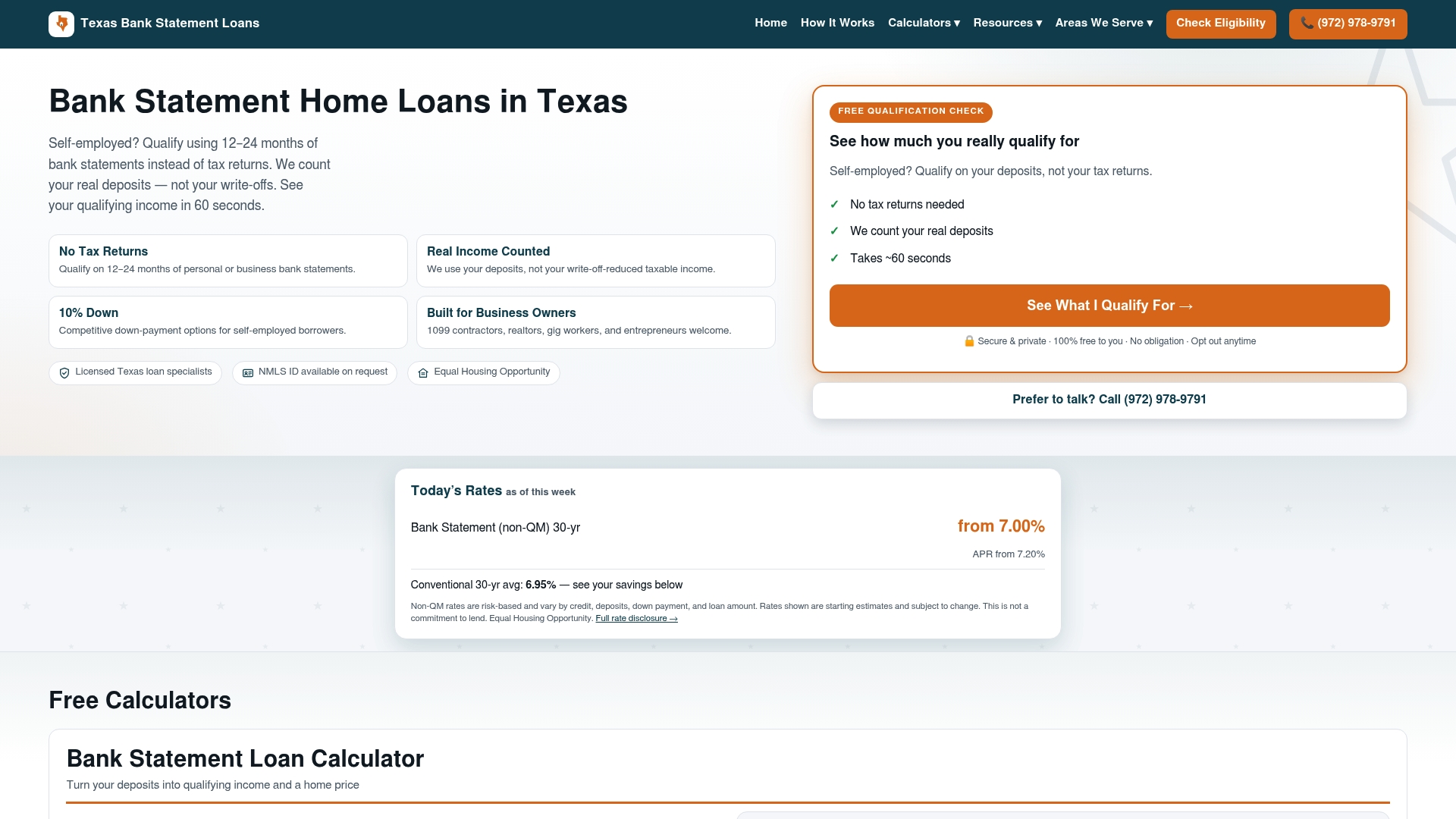
If tax returns understate your real income, a bank-statement home loan lets us qualify you using 12 to 24 months of actual deposits instead.
A few ways to start:
- Check current pricing on our Bank Statement (non-QM) 30-yr page for current rate information.
- Run your numbers through our bank statement loan calculator to estimate qualifying income.
- Ask us directly whether your quote includes BPMI or LPMI, and get the cancellation terms in writing before you commit.
Visit Texasbankstatementloans to start your qualification check and see how bank-statement underwriting could work for you.
This article is general information, not a substitute for advice from a qualified financial advisor. Consult a qualified financial professional about your own circumstances before acting on anything here.
FAQ
Can I remove PMI if I have an FHA loan?
FHA loans use mortgage insurance premiums (MIP), which follow separate rules from conventional BPMI and often cannot be canceled the same way. The HUD FHA handbook outlines its own schedules and exceptions, so check your specific loan terms or ask your servicer directly.
What does LPMI stand for in a mortgage?
LPMI stands for lender-paid mortgage insurance, where the lender covers the premium upfront and recovers the cost through a permanently higher interest rate. Unlike borrower-paid insurance, it generally cannot be canceled without refinancing, according to Fannie Mae’s mortgage insurance primer.
What is BPMI in a mortgage?
BPMI stands for borrower-paid mortgage insurance, a monthly premium added to your mortgage statement until your balance reaches a qualifying equity level. You can request cancellation at 80% of the original value, and it must automatically terminate at 78%, per CFPB guidance.
Is it better to put 20% down or pay PMI?
If a larger down payment isn’t realistic, BPMI at least gives you a legal path to cancellation once you build enough equity, which LPMI does not offer in the same way.
Sources
- When can I remove private mortgage insurance (PMI) from my loan?, Consumer Financial Protection Bureau
- CFPB compliance bulletin: Private Mortgage Insurance cancellation and termination (2015-08-04)
- Connecticut Avenue Securities Investor Call - Mortgage Insurance Primer, Fannie Mae
- Termination of Conventional Mortgage Insurance, Fannie Mae Servicing Guide
See what you qualify for in 60 seconds, free and no credit check. Use the eligibility check at the top of this page.