
Yes, Texas property taxes often decide whether a rental clears a DSCR loan, and the fix is simple to state even when it’s easy to miss. Underwrite the deal using the un-homesteaded, reassessed tax figure from the county appraisal district, not the seller’s current bill. Most DSCR lenders in Texas want a minimum ratio in the range generally around 1.20x to 1.25x, and the gap between a homesteaded tax bill and a reassessed one is often the entire cushion between qualifying and getting declined.
TL;DR:
- Always underwrite Texas rental properties using the reassessed, un-homesteaded tax figure from the county appraisal district, not the seller’s current bill.
- Be aware that property taxes in Texas can significantly exceed the seller’s bill after transfer, especially if the home is no longer homesteaded and exempt from appraisal caps.
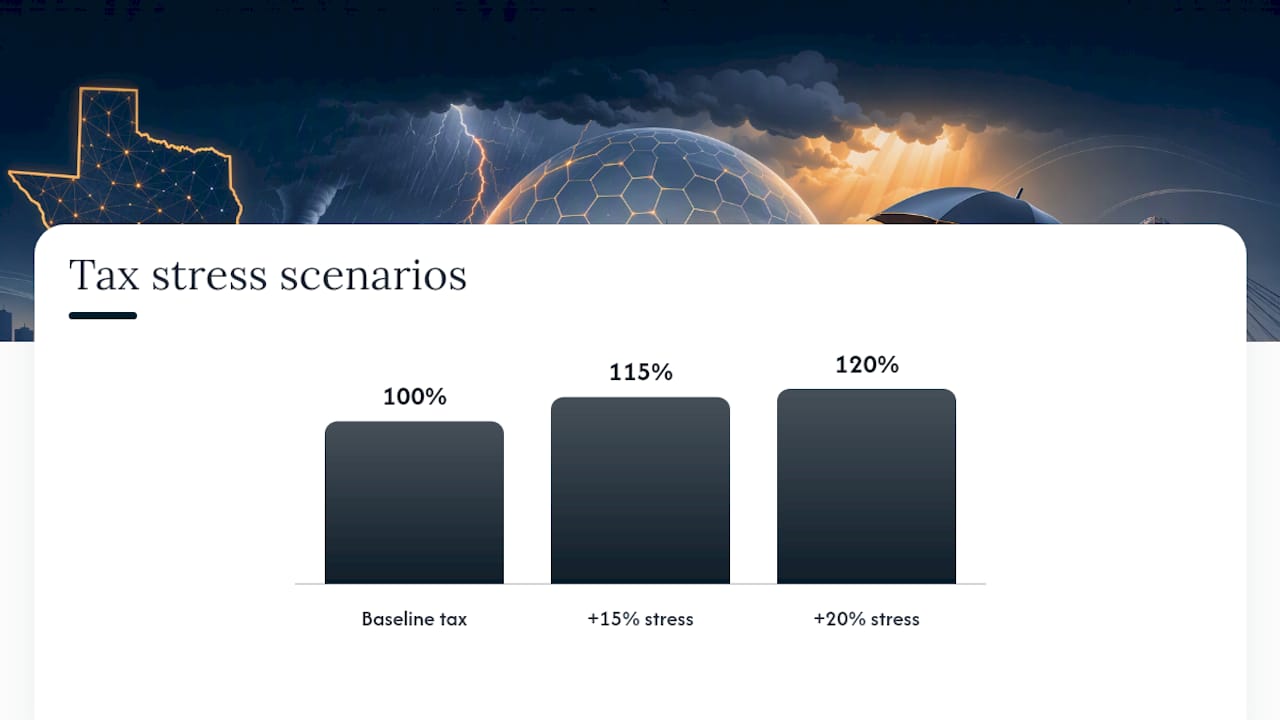
- Run stress tests adding 15 to 20 percent to your tax estimate to ensure the DSCR ratio remains above the minimum threshold of 1.20x to 1.25x in all scenarios.
- Confirm the property’s exemption status and assess actual taxes directly from the county, as overlay districts like MUD and PID can add hundreds of dollars monthly in taxes that many calculators ignore.
- Proactively file annual protests to reduce the assessed value by using the income approach, reducing future taxes and strengthening refinancing DSCR ratios.
Table of Contents
- What Is DSCR and Why Do Property Taxes Move It So Much in Texas?
- The Homestead Trap: Why the Seller’s Tax Bill Lies to You
- How to Underwrite Property Tax for a Texas DSCR Loan
- Can You Lower a Texas Property Tax Assessment Before It Wrecks Your DSCR?
- MUD, PID, and the Local Taxes Consumer Calculators Never Show You
- Worked Example: A Reassessment Turns a “Yes” Into a “No”
- What Lenders Actually Require, and How to Rescue a Borderline File
- What a Decade of Texas DSCR Files Teaches You About the Tax Line
- How Texasbankstatementloans Helps You Close a Texas DSCR Deal Without Tax Surprises
- Where These Numbers and Rules Come From
- Sources
- FAQ
What Is DSCR and Why Do Property Taxes Move It So Much in Texas?
Debt service coverage ratio is gross rental income divided by the property’s total monthly housing obligation, known as PITIA: principal, interest, taxes, insurance, and association dues where they apply. Lenders underwriting DSCR loans skip your personal income entirely and ask one question: does the rent this property collects cover what it costs to hold it?
Most Texas DSCR programs set a minimum ratio somewhere in the 1.20x to 1.25x range, though some lenders will go lower with a bigger down payment or higher reserves. A ratio of 1.20 means rent covers 120% of PITIA. Drop below that floor and the loan either gets declined, repriced, or restructured with a larger down payment.
Here’s why Texas amplifies this problem more than most states. Texas has no state income tax, so cities, counties, school districts, and special districts lean harder on property tax to fund everything from roads to schools. That means the “T” in PITIA is proportionally bigger here than in states like California or Virginia, where income tax carries more of the load.
- Principal and interest: usually the most predictable and stable piece of PITIA.
- Property taxes: the least stable and easiest to misjudge, especially post-sale.
- Insurance: rising steadily across Texas due to weather exposure, but rarely swings 20% overnight.
- Association dues: fixed and disclosed upfront, low surprise risk.
A tax estimate that’s off by even a few hundred dollars a month can push a deal from comfortably approved to declined, because taxes sit inside the one line of PITIA that changes the moment ownership changes.
The Homestead Trap: Why the Seller’s Tax Bill Lies to You
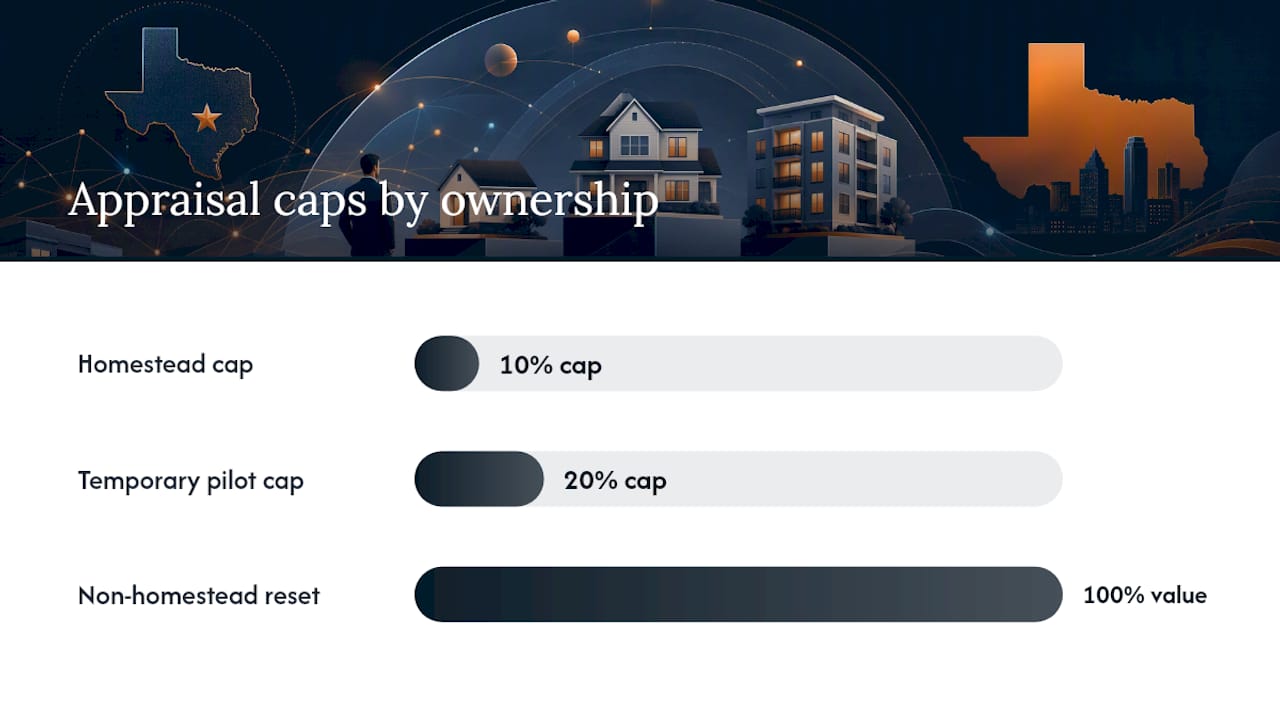
Texas homeowners who live in their property can file for a residence homestead exemption, which knocks a chunk off the taxable value and caps annual appraisal increases at 10% for as long as they own and occupy the home. Investment properties get neither benefit. No homestead exemption, no 10% cap, full taxable value from day one.
That’s the trap. A seller who has owned and lived in a home for ten years might be paying property tax on an assessed value locked well below current market value, thanks to that cap compounding year after year. Buy that house as a rental and the appraisal district doesn’t just apply the current tax rate. It resets the taxable value to something closer to market, often the sale price itself, the moment the deed transfers to a non-homesteaded owner.
Statistic Callout: Texas piloted a temporary 20% appraisal cap for certain non-homestead parcels, but it’s a limited-duration program, not a permanent protection, and investors should never assume it applies to a given parcel without confirming with the CAD.
The failure mode is predictable: a broker pulls last year’s tax bill off the listing, plugs it into the DSCR calculator, and the deal looks fine.
- Never underwrite from a homesteaded seller’s tax bill. Ever.
- Assume reassessment will happen close to the sale price unless the CAD tells you otherwise.
- Confirm exemption status directly with the county, not through the listing sheet.
How to Underwrite Property Tax for a Texas DSCR Loan
Getting this right takes five deliberate steps, and skipping any one of them is how borderline deals blow up after closing.
- Call or check the county appraisal district (CAD) directly for the parcel’s current assessed value assuming no homestead exemption, plus the full combined tax rate across every taxing entity (city, county, school district, and any special districts).
- Add MUD, PID, or other special district levies that appear on the tax certificate but not always on the CAD’s headline number.
- Confirm escrow timing with the lender. Some servicers escrow based on the prior owner’s bill for the first year, which can create a shortfall notice later.
- Stress-test the number. Run DSCR again assuming taxes come in 15% to 20% above your baseline estimate. If the deal still clears 1.20x under that stress case, you have real margin.
- Document every assumption in writing, including the CAD quote date and the rate source, so the underwriter isn’t guessing where your number came from.
Pro Tip: Treat any property tax protest you plan to file as pure upside, never as part of the underwriting math. Lenders qualify you on the tax bill they can verify today, not a lower number you’re hoping to win later.
Running the numbers through a DSCR calculator built for Texas inputs makes the stress test faster, since you can swap the reassessed tax figure in and out without rebuilding a spreadsheet each time.
Can You Lower a Texas Property Tax Assessment Before It Wrecks Your DSCR?
Protesting a Texas property tax assessment is a real remedy, and for rental property it has a statutory weapon most owner-occupants never touch. Under Texas Tax Code §23.012, income-producing real property can be valued using the income approach: net operating income divided by a market capitalization rate, rather than comparable sales.
That matters because sales comps often reflect what an owner-occupant buyer will pay, which can run well above what the rent roll actually supports. If your NOI and a defensible market cap rate produce a lower value than the CAD’s sales-comp number, you have grounds to protest.
The deadline is firm: May 15, or 30 days after your notice of appraised value arrives, whichever is later, and you must file separately in every county where you own property. Miss one county’s window and that parcel is locked at its assessed value for the entire year.
To build a credible income-approach case, bring:
- A full lease roll showing actual rents, not asking rents.
- Realistic vacancy and expense ratios for the market.
- A cap rate you can defend with comparable investor sales, not a number pulled from a national report.
Statistic Callout: Small differences in the cap rate you argue for, say 6.5% versus 7.5%, can swing the indicated value by hundreds of thousands of dollars on a mid-size multifamily property, which is why the cap rate selection matters more than any other input in an ARB hearing.
A successful protest doesn’t change today’s underwriting, since lenders work off the current bill. It does set up a stronger DSCR at refinance and gives you a lower baseline for the next acquisition in that county.
MUD, PID, and the Local Taxes Consumer Calculators Never Show You
Municipal Utility Districts and Public Improvement Districts layer extra taxes on top of the standard county and school district rates, and they’re common in master-planned subdivisions across the Houston, Dallas, and Austin suburbs. MUD assessments alone commonly add $1,500 to $3,600 a year in additional carrying cost, depending on the district’s outstanding bond debt.
Most consumer-facing mortgage calculators and even some listing sites pull only the county’s headline tax rate and skip these overlay districts entirely. That’s how a rental in a MUD-heavy suburb looks $150 to $300 a month cheaper than it actually is.
Find the real number by checking:
- The title commitment, which usually lists every taxing entity attached to the parcel.
- The most recent tax certificate from the county tax office.
- Seller disclosure forms, though these aren’t always reliable for investor-owned properties.
Worked Example: A Reassessment Turns a “Yes” Into a “No”
Take a $350,000 single-family rental in a Texas suburb, renting for $2,600 a month, financed with 25% down on a 30-year fixed loan at 7.25%.
Assumptions: $262,500 loan amount, principal and interest around $1,791 monthly, insurance estimated at $145 monthly, no HOA dues.
| Outcome | What It Means for the Loan |
|---|---|
| Underwritten on seller’s bill | Looks like a strong approval, but it’s built on a number that won’t survive the sale |
| Underwritten on reassessed CAD figure | Drops but still clears most 1.20x to 1.25x program floors |
| MUD included | Falls below the common floor for many DSCR programs |
The lender decision hinges entirely on which row you show them. A file built on the seller’s bill sails through preliminary review and then dies at closing when the real escrow number surfaces. If the MUD-adjusted ratio comes in short, the mitigation options are straightforward: increase the down payment to shrink the loan amount, extend to a 40-year term if the program allows it, or negotiate a small rate buydown to lower the monthly principal and interest.
What Lenders Actually Require, and How to Rescue a Borderline File
Texas DSCR programs vary by lender, but the common boxes look similar: a minimum credit score in the 660 to 700 range, DSCR floors around 1.20x to 1.25x, loan-to-value caps typically between 70% and 80%, and reserve requirements of three to six months of PITIA in the bank.
For proof of the actual tax figure, lenders will accept a CAD printout showing current assessed value, a title company’s tax certificate, or a direct county tax office statement. A screenshot of last year’s listing tax bill won’t cut it.
- Increase the down payment to lower the loan amount and boost the ratio.
- Extend amortization where the program allows a 40-year term.
- Negotiate a temporary rate buydown to reduce monthly interest.
- Document a pending protest as future upside, never as current qualifying income.
Pro Tip: *If a file is close to the floor, ask the loan officer whether the program allows interest-only qualification.
What a Decade of Texas DSCR Files Teaches You About the Tax Line
The homestead trap has killed more DSCR deals than bad rent projections ever will, because the failure is invisible until closing. One phone call to the CAD before submission would have caught it.
The single highest-leverage habit for anyone building a Texas rental portfolio is asking the appraisal district for the un-homesteaded number before you ever run DSCR math, then filing a protest every single year regardless of whether you expect to win. Annual protests compound the same way appraisal increases do, just in your favor instead of against you.
- Saad
How Texasbankstatementloans Helps You Close a Texas DSCR Deal Without Tax Surprises
Texasbankstatementloans built its DSCR loan program around the exact problem this article covers: getting the property’s real numbers, including the reassessed tax figure, into the underwriting file before it becomes a closing-day surprise.
If you’re self-employed, running an LLC, or building a rental portfolio and want an income-based path that doesn’t hinge on tax returns, the same bank-statement approach that qualifies primary home buyers also supports DSCR investment purchases. Down payments start at 10%, and you can run your rent-versus-PITIA numbers through the DSCR calculator in about 60 seconds to see where a property lands before you make an offer. For buyers targeting the Houston market specifically, where MUD districts are common, the Houston bank statement loan page walks through local program details. Whether you’re buying your first rental or refinancing after a successful protest, start with a free, no-obligation qualification check to see what the numbers actually support.
Where These Numbers and Rules Come From
Every tax rule and calculation method in this article traces back to primary sources: the Texas Comptroller’s property tax basics page for how appraisal districts and ARBs operate, the Comptroller’s exemptions guidance for homestead rules, and Texas Tax Code §23.012 for the income approach used in protests. Protest deadlines and homestead-trap mechanics draw on the TaxDrop landlord protest guide, and PITIA definitions come from the Consumer Financial Protection Bureau.
This article is general information, not a substitute for advice from a qualified financial advisor. Consult a qualified financial professional about your own circumstances before acting on anything here.
Sources
- Texas Tax Code §23.012, Authority to use income approach
- Texas landlord property tax protest guide (2026) | TaxDrop
FAQ
How Much of Your Property Taxes Are Tax Deductible in Texas?
Property taxes on a rental property are generally fully deductible as a business expense against rental income on your federal return, unlike a primary residence where deductions are capped under current federal rules. Consult a tax professional for your specific situation, since deductibility depends on how the property is titled and used.
How Much Are Property Taxes on a $400,000 House in Texas?
At a typical combined local rate near 2.2%, an assessed value produces a property tax that varies by county, school district, and any MUD or PID overlays attached to that parcel, so monthly tax depends entirely on local factors.
Is Texas Considering Eliminating Property Taxes?
There has been ongoing political discussion in Texas about reducing or restructuring property tax reliance, but no law has eliminated property taxes, and investors should underwrite based on current statutes and current CAD assessments, not speculative future changes.
What Is a $12,000 Property Tax Exemption in Texas?
This typically refers to the state’s homestead exemption for school district taxes, which reduces the taxable value of an owner-occupied primary residence. It does not apply to rental or investment properties, which is central to why the homestead trap catches so many DSCR buyers off guard.
Recommended
See what you qualify for in 60 seconds, free and no credit check. Use the eligibility check at the top of this page.