
Hard inquiries can lower your credit score; soft inquiries never do. A hard inquiry shows up when you apply for a mortgage, credit card, or auto loan and a lender pulls your full report, while a soft inquiry happens in the background, whether that’s a prescreened offer or you checking your own file. If you’re prepping for a major loan, the moves that matter most are checking your reports, disputing anything you didn’t authorize, and shopping rates inside the window that protects your score.
TL;DR:
- Multiple hard inquiries within two weeks for the same loan type generally count as only one, minimizing score impact, especially for mortgage or auto shopping.
- Soft inquiries do not affect your credit score regardless of the number or timing, including checking your own report or preapproved offers.
- A single hard inquiry typically lowers your score by only a few points and remains on your report for about two years, though scoring models ignore it after approximately 12 months.
- Recognizing which inquiries are soft vs. hard can prevent surprises; always ask lenders beforehand if unsure, particularly with newer fintech or buy-now-pay-later services.
- Regularly monitoring your credit report helps identify unauthorized hard inquiries early, especially since some soft inquiries like insurance checks can be visible to certain businesses but not lenders.
Table of Contents
- Soft vs. Hard Inquiry: The Core Difference
- How Much Do Inquiries Actually Move Your Score?
- Everyday Examples of Each Inquiry Type
- Who Can Actually See Your Inquiries?
- Disputing an Inquiry You Didn’t Authorize
- Smarter Ways to Shop Without Tanking Your Score
- Why Routine Credit Checks Should Be a Habit, Not a Panic Response
- How Texas Bank Statement Home Loans Handles Your Credit Check
- Sources
Soft vs. Hard Inquiry: The Core Difference
The line between the two comes down to authorization and purpose, not who’s looking at your file. Experian and the other bureaus call this “permissible purpose”: a hard inquiry only happens when you’ve applied for credit and given a lender explicit consent to pull your full credit report. A soft inquiry happens for informational reasons, no application required.
Hard inquiries typically come from:
- A mortgage application
- A new credit card application
- An auto loan or personal loan application
- Some apartment rental credit checks
- Certain new cell phone or utility accounts requiring a credit check
Soft inquiries typically come from:
- You pulling your own credit report or score
- Prescreened or preapproved credit card offers you didn’t request
- An existing lender reviewing your account (a credit line increase check)
- Employer background checks (with your consent, but no score impact)
The Consumer Financial Protection Bureau draws the same distinction: hard inquiries tie to a credit application and can temporarily ding your score, while soft inquiries are purely informational and never touch it. If you’re ever unsure which kind a company will run, just ask before you sign anything. Most lenders will tell you outright whether a rate check is a soft or hard pull.
How Much Do Inquiries Actually Move Your Score?
A single hard inquiry usually costs a handful of points, not dozens. Payment history and credit utilization carry far more weight in every major scoring model, and the NFCC specifically advises against fixating on inquiries when those two factors matter so much more.
Quick facts on timing and impact:
- Hard inquiries stay on your credit report for up to two years, but most scoring models stop counting them against you after about 12 months, according to TransUnion.
- Soft inquiries never affect your score, no matter how many accumulate.
- Multiple hard inquiries for the same type of loan within a short window count as one inquiry for scoring purposes.
That last point matters more than most people realize. If you’re shopping for a mortgage or auto loan, myFICO explains that scoring models group similar rate-shopping inquiries into a single event, as long as they fall within a defined window, commonly somewhere between 14 and 45 days depending on the model. Older FICO versions tend to use a tighter window; newer ones stretch it out. The practical upshot: getting quotes from five mortgage lenders in the same week doesn’t cost you five separate inquiry penalties. It costs you roughly one, as long as you compress the shopping into that timeframe rather than spreading applications out over a couple of months.
Everyday Examples of Each Inquiry Type
Recognizing which situation you’re in helps you avoid surprises on your next credit report. A few categories are obvious. Others catch people off guard.
Common hard-inquiry triggers:
- Applying for a mortgage or refinance
- Opening a new credit card
- Financing a car
- Taking out a personal loan
- A landlord running a full credit check for a lease
- Applying for a new line of business credit
Common soft-inquiry triggers:
- Checking your own score through a bank app or credit monitoring service
- Receiving a “you’re preapproved” mailer
- Your current credit card issuer reviewing your account periodically
- A background check tied to a job application
- Some buy-now-pay-later prequalification checks
- Insurance quote reviews (which some bureaus classify as soft, though visibility rules can differ by business type)
When you’re not sure which category applies, particularly with newer fintech products or BNPL services, ask directly whether the check is a soft or hard pull before you submit anything. Reputable companies disclose this upfront, and the honest ones will say so in their terms before you click “submit.”
Who Can Actually See Your Inquiries?
Lenders reviewing a new application can see your hard inquiries, and so can you. Soft inquiries are typically visible only to you, which is why checking your own score as often as you want never costs you anything.
There’s a wrinkle worth knowing about, though. TransUnion notes that some soft inquiries, like insurance-related account reviews, can be visible to certain businesses within that same industry even though they stay invisible to general lenders. That’s a narrow exception, but it explains why your insurance company might reference a soft pull you don’t remember authorizing.
To find your inquiries, pull up the “inquiries” section of your credit report, usually listed separately from your account history, with the requesting company’s name and the date of the pull. If a name looks unfamiliar, that’s your cue to dig further before assuming it’s a mistake.

Disputing an Inquiry You Didn’t Authorize
Finding a hard inquiry you don’t recognize is unsettling, but the fix is straightforward if you move quickly.
- Check your own records first. Look back at recent applications, even ones from months ago, since some inquiries take time to appear.
- Contact the company listed on the inquiry. Ask what the pull was for and request removal if you never applied.
- File a dispute with the credit bureau showing the inquiry if the lender won’t confirm or remove it.
- Consider a fraud alert or credit freeze if you find other signs of identity theft, like unfamiliar accounts or address changes.
Pull your reports from all three bureaus through AnnualCreditReport.com, the only source for your free federally mandated reports, since inquiries and even fraud can show up on one bureau’s file and not the others.
Pro Tip: Check all three bureau reports, not just one. A fraudulent hard inquiry sometimes appears on Equifax but not TransUnion, depending on which report the fraudster’s target lender pulled from.
Smarter Ways to Shop Without Tanking Your Score
The goal isn’t avoiding hard inquiries entirely. It’s being deliberate about when they happen.
- Use soft-pull prequalification tools first to see your likely approval odds before submitting a formal application, an approach highlighted by lenders offering soft pull business loan prequalification as an alternative to blind applications.
- Compress your rate shopping into a tight window (aim for two to three weeks) so multiple hard pulls for the same loan type count as one.
- Fix late payments and pay down credit card balances before applying. The NFCC points to payment history and utilization as far bigger score levers than any inquiry.
- Accept that a few points of temporary dip is a reasonable trade for finding a meaningfully lower interest rate.
If you’re weeks away from applying for a mortgage, this is the moment to be strategic, not paranoid. A well-timed batch of rate quotes costs you almost nothing on your score. Scattered applications over several months cost you more than most people expect, a pattern covered in more depth in this credit score impact guide.
Why Routine Credit Checks Should Be a Habit, Not a Panic Response
Most people only look at their credit report after something goes wrong, a denied application, a surprise score drop, a fraud alert. That reactive habit is backwards. Checking your own report is a soft inquiry, free of cost to your score, and it’s the only way to catch an unauthorized hard inquiry before it sits there for two years.

The bigger mistake I see in how people approach this topic is treating inquiries as the main threat to their score, when payment history and utilization do far more damage over time. Someone who misses two payments a year but never applies for new credit will still see a lower score than someone who applies for three well-timed loans and pays everything on time. Inquiries are a rounding error next to those two factors.
If you’re self-employed and preparing for a mortgage, the smarter play is combining both: run your prequalification checks (soft pulls), fix any real credit issues months in advance, and only trigger hard inquiries once you’re genuinely ready to compare final offers.
- Saad
How Texas Bank Statement Home Loans Handles Your Credit Check
Self-employed borrowers face a particular headache here: tax returns rarely reflect real income after deductions, which makes qualifying for a traditional mortgage harder than it should be. Texas Bank Statement Loans solves that by evaluating 12 to 24 months of actual bank deposits instead of tax returns, giving business owners, 1099 contractors, and gig workers a mortgage path built around what they actually earn.
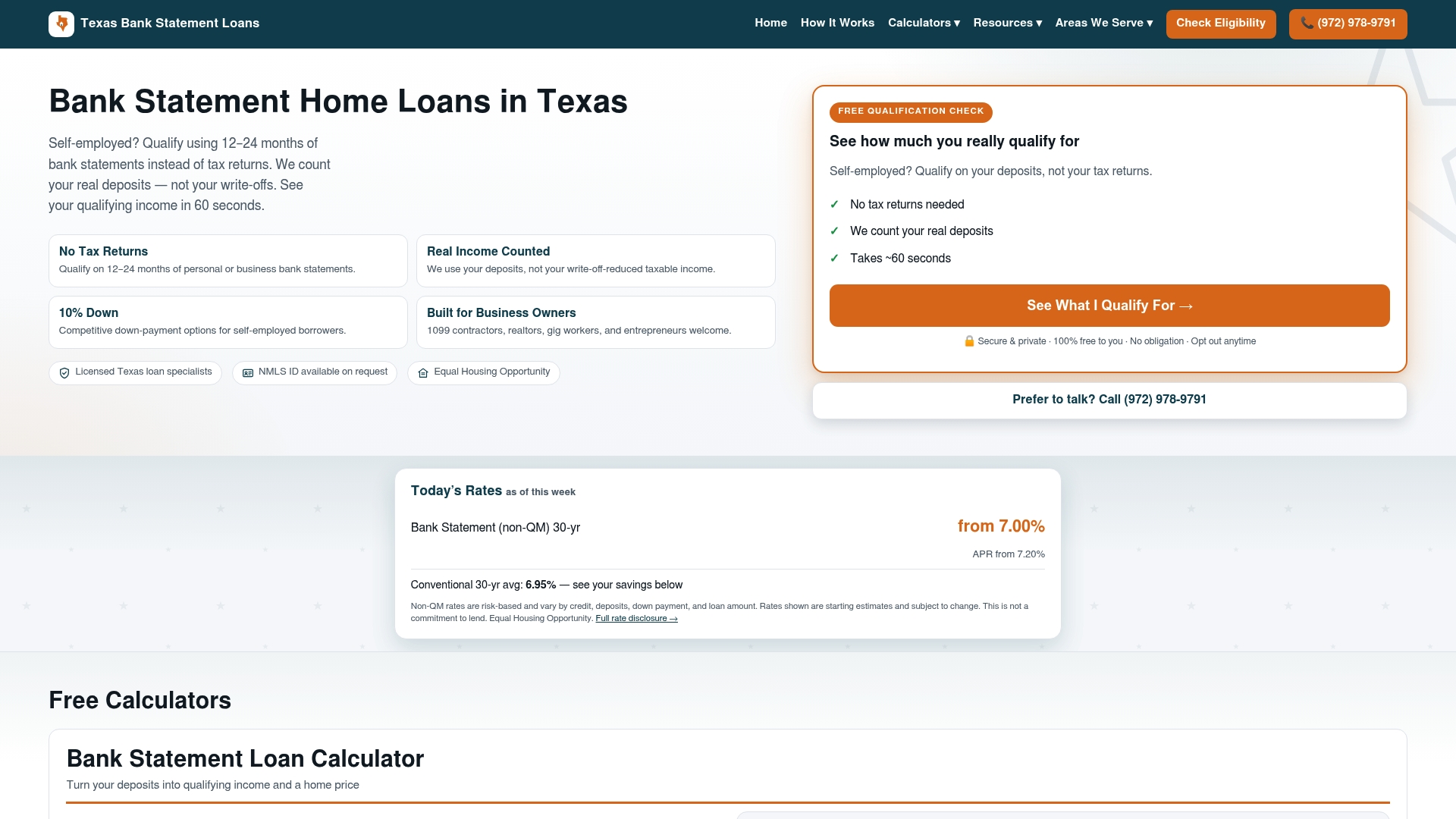
The initial qualification check is designed to be quick and low-friction, letting you see what you can realistically afford in about 60 seconds before you commit to a full application. If you’ve already worked through the inquiry basics above and you’re ready to see real numbers, start with a no-obligation qualification check or compare current bank statement loan rates before you apply anywhere else.
This article is general information, not a substitute for advice from a qualified financial advisor. Consult a qualified financial professional about your own circumstances before acting on anything here.
Sources
- Consumer Financial Protection Bureau, What is a credit inquiry?
- Experian, Hard Inquiry vs. Soft Inquiry: What’s the Difference?
- myFICO, How soft vs hard pull credit inquiries work
- TransUnion, The difference between hard and soft credit inquiries
- NFCC, Soft vs hard credit checks: how each one affects your credit scores
Recommended
See what you qualify for in 60 seconds, free and no credit check. Use the eligibility check at the top of this page.