
Yes, you can get a bank statement loan after bankruptcy, and for most self-employed borrowers it’s the fastest realistic path back into homeownership. Non-QM lenders routinely approve applicants soon after a Chapter 7 discharge or during an active Chapter 13, though expect a higher rate and a bigger down payment than a conventional loan would require. The sections below break down which program fits your situation, what waiting periods actually apply, and exactly what to put in your application file.
TL;DR:
- Borrowers can qualify for non-QM bank statement loans within months after bankruptcy discharge, often with higher rates and larger down payments compared to conventional loans.
- Underwriters evaluate 12 to 24 months of bank deposits, focusing on deposit consistency and owner draws rather than tax returns, making these loans suitable for self-employed applicants.
- Waiting periods for traditional agency loans are longer, with conventional financing typically requiring years after bankruptcy, while non-QM options can approve sooner based on lender-specific rules.
- Necessary documentation includes bankruptcy discharge papers, bank statements, proof of reserves, and explanations for any unusual deposits or derogatory marks.
- Improving long-term eligibility involves maintaining on-time payments for six to 12 months, reducing new debts, increasing down payments, and building reserves to qualify for better rates over time.
Table of Contents
- Which Loan Programs Approve Borrowers After Bankruptcy?
- How Does Bank Statement Underwriting Work After Bankruptcy?
- How Long After Bankruptcy Can You Qualify for a Mortgage?
- What Documents Do You Need to Apply After Bankruptcy?
- How Do You Rebuild Eligibility for a Stronger Loan?
- Which Program Fits Your Income Type?
- How Texas Bank Statement Home Loans Evaluates Post-Bankruptcy Borrowers
- Speed Versus Cost: What Borrowers Get Wrong
- Check Your Options Before You Commit to a Rate
- Where to Verify the Rules Yourself
- Sources
- FAQ
Which Loan Programs Approve Borrowers After Bankruptcy?
Bank statement and other non-QM loans sit at the top of the list for self-employed borrowers coming out of bankruptcy. These programs qualify you using deposits, not tax returns, so they sidestep the biggest problem bankruptcy leaves behind: a tax history that looks worse than your actual cash flow. Because non-QM lenders set their own guidelines rather than following Fannie Mae or Freddie Mac rules, many will consider a file with a recent discharge that a conventional underwriter would reject outright.
Here’s how the main routes stack up:
- Bank statement / non-QM loans: the default choice for business owners and contractors whose deposits tell a stronger story than their tax returns.
- DSCR loans: built for real estate investors, since approval hinges on the property’s rental income rather than the borrower’s personal financial history.
- P&L and 1099 programs: fit borrowers with clean bookkeeping or steady 1099 income who can document earnings without a full tax-return package.
- FHA, VA, and conventional loans: available eventually, but they carry longer waiting periods and stricter documentation than most non-QM programs.
The tradeoff is straightforward. Non-QM programs get you in the door faster, but you’ll typically pay a higher interest rate and put down more cash upfront. Agency loans cost less over time, but you may be waiting years to even apply. Which one makes sense depends less on your credit score and more on how your income actually shows up on paper.
How Does Bank Statement Underwriting Work After Bankruptcy?
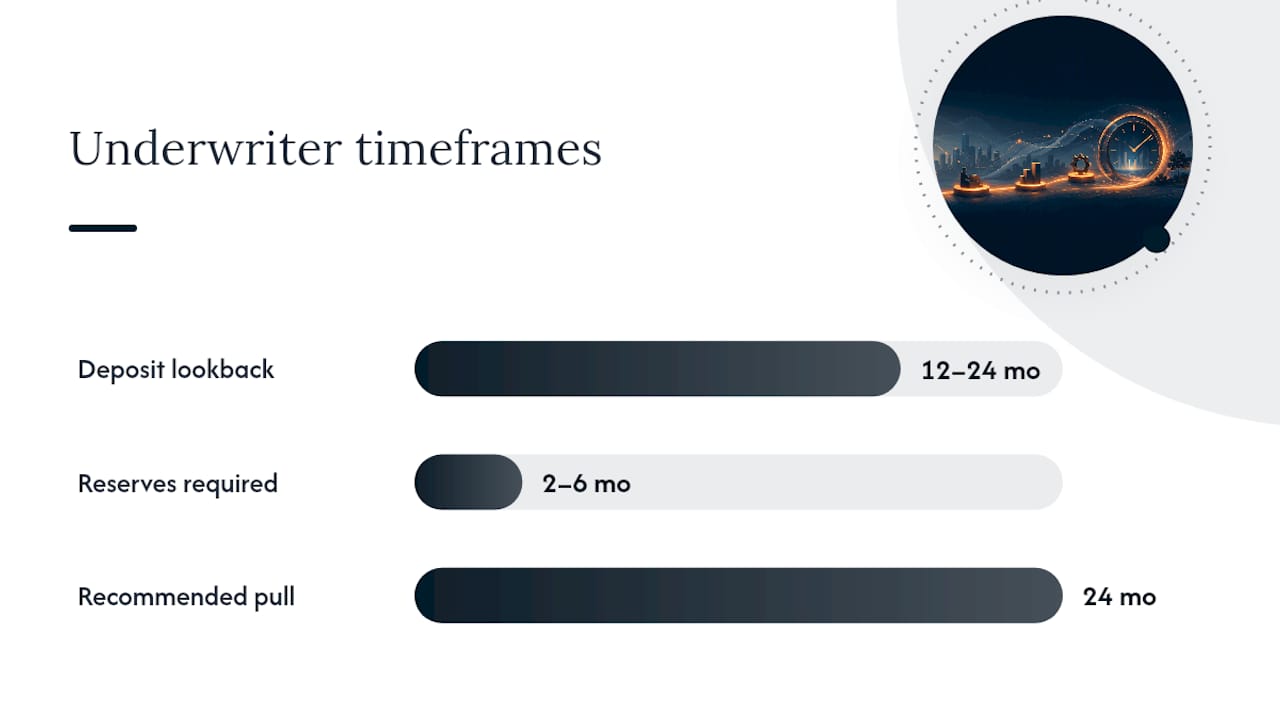
Bank statement underwriting swaps your tax returns for a direct look at your bank deposits, which is exactly why it works so well for people with a bankruptcy in the rearview mirror. Lenders typically average 12 to 24 months of deposits, and they treat business accounts differently than personal ones. On business bank statement loans, underwriters apply an expense factor (often a flat percentage) to account for overhead, since not every dollar deposited is profit. Personal accounts usually get counted closer to dollar for dollar, since the assumption is that money landing in a personal account is already net income.
A few things matter most to the underwriter:
- Consistency of deposits month to month, not just the total.
- Owner draws and how they’re separated from operating expenses.
- Reserves on hand after closing, often two to six months of payments.
- Whether the file needs manual underwriting because of the recent bankruptcy.
This approach tends to beat tax returns when you write off a lot of business expenses, because your taxable income on paper is much lower than what actually lands in your account.
Pro Tip: Pull your last 24 months of statements before you talk to a lender and circle any unusually large deposits. Underwriters will ask about them anyway, and having an answer ready speeds up the file dramatically.
How Long After Bankruptcy Can You Qualify for a Mortgage?
Waiting periods vary enormously depending on which loan type you’re chasing, and this is where a lot of borrowers get discouraged for no reason. Fannie Mae’s guidance on significant derogatory credit events sets multi-year waiting periods before a bankruptcy file becomes eligible for conventional financing, and those benchmarks are worth knowing even if you never plan to use an agency loan. They show you when the broader mortgage market starts treating your file like anyone else’s.
Non-QM lenders play by different rules entirely. Some non-QM programs allow approval within months of discharge, with eligibility ranging from immediate to about 12 months depending on the lender and the borrower’s overall profile. Pricing usually improves once you’re 12 to 24 months past discharge, since that’s when reserves, credit repair, and payment history start working in your favor.
- Chapter 7: lenders generally count from the discharge date, since Chapter 7 wipes out unsecured debt but leaves secured obligations like a car loan intact.
- Chapter 13: because the case can run three to five years while you’re still repaying creditors, some non-QM lenders will consider you mid-plan if payments have been consistent, while others wait for discharge or dismissal.
- Added complications: a foreclosure, a mortgage charge-off, or multiple derogatory events layered on top of the bankruptcy will usually extend the waiting period regardless of loan type.
FHA has its own separate framework. HUD’s guidance on bankruptcy and FHA eligibility lays out specific rules that don’t map cleanly onto non-QM timing, so don’t assume FHA and bank statement programs treat your discharge date the same way.
What Documents Do You Need to Apply After Bankruptcy?
Lenders reviewing a post-bankruptcy file want to see the full story, not just the good parts. Getting organized before you apply saves weeks of back-and-forth with underwriting.
- Bankruptcy discharge order and schedules, including proof of dismissal if the case was resolved that way rather than through full discharge.
- 12 to 24 months of bank statements, business and/or personal depending on the program, showing deposit consistency.
- Proof of reserves, meaning asset statements covering savings, investments, or retirement accounts beyond what you’ll use for closing.
- A recent credit report review, since lenders will want any post-bankruptcy accounts current and any old derogatory marks explained.
- A letter of explanation, a short, factual account of what caused the bankruptcy and why your situation has stabilized since.
- Proof of on-time housing payments since discharge, whether that’s rent receipts or a mortgage statement from a prior home.
- Business bookkeeping records, especially if you’re pursuing a P&L program that requires a CPA or licensed tax preparer to validate your numbers.
Pro Tip: Write your letter of explanation before the underwriter asks for it. A calm, factual paragraph submitted upfront reads very differently than the same explanation written under pressure after a conditional denial.
How Do You Rebuild Eligibility for a Stronger Loan?
The single biggest lever you control is time paired with clean payment history. Most non-QM lenders want to see at least six to 12 months of on-time payments after discharge before they’ll offer their best pricing, and some want proof of rent or an existing mortgage paid without a single late mark.
- Add one or two tradelines responsibly, like a secured credit card, and keep balances low rather than opening several accounts at once.
- Avoid financing a car or taking on new large debt right before applying. Fresh liabilities right before underwriting almost always raise red flags.
- Build reserves beyond the minimum. Extra cash in the bank does more to offset a recent bankruptcy than almost anything else in your file.
- Increase your planned down payment if you can. Even moving from 10% to 15% or 20% often unlocks better rate tiers and a wider set of willing lenders.
Pro Tip: Keep your bank statements as clean as possible in the months before applying. Large unexplained transfers or big cash deposits force extra documentation requests that can stall your file for weeks.
None of this is glamorous work, but it’s the difference between qualifying at a rate that stings for 30 years and qualifying at one you can live with.
Which Program Fits Your Income Type?
Matching your income documentation to the right program matters more than chasing the lowest advertised rate, since a mismatch usually means denial regardless of your credit score.
- Bank statement loans fit borrowers with strong, consistent deposits and taxable income that looks small next to actual cash flow.
- P&L loans work for business owners with formal bookkeeping, where a CPA or preparer signs off on a profit-and-loss statement instead of full bank statement review.
- 1099 programs suit contractors and gig workers with steady 1099 income across one or two clients, even without traditional payroll history.
- DSCR loans skip personal income entirely and qualify based on a rental property’s cash flow, making them the right call for investors rather than primary-residence buyers.
- FHA, VA, and conventional loans remain worth aiming for down the road, once your waiting period clears and your file looks stronger, since they typically carry lower long-term costs than non-QM.
How Texas Bank Statement Home Loans Evaluates Post-Bankruptcy Borrowers
Texasbankstatementloans works from your actual bank deposits rather than tax returns, reviewing 12 to 24 months of statements to calculate qualifying income for self-employed borrowers, 1099 contractors, and gig workers. Down payment options start at 10%, and a free qualification check takes about 60 seconds to show what you can realistically afford.
Before you start, gather your discharge paperwork, two years of bank statements, and a rough idea of your available reserves. Having those ready turns the initial qualification conversation into a quick, useful checkpoint instead of a guessing game about whether you even qualify to apply.
Speed Versus Cost: What Borrowers Get Wrong
Non-QM loans restore access to homeownership fast, and that speed is real, not a marketing trick. But faster almost always means more expensive over the life of the loan, and too many borrowers fixate on approval odds while ignoring what the rate costs them over 30 years.
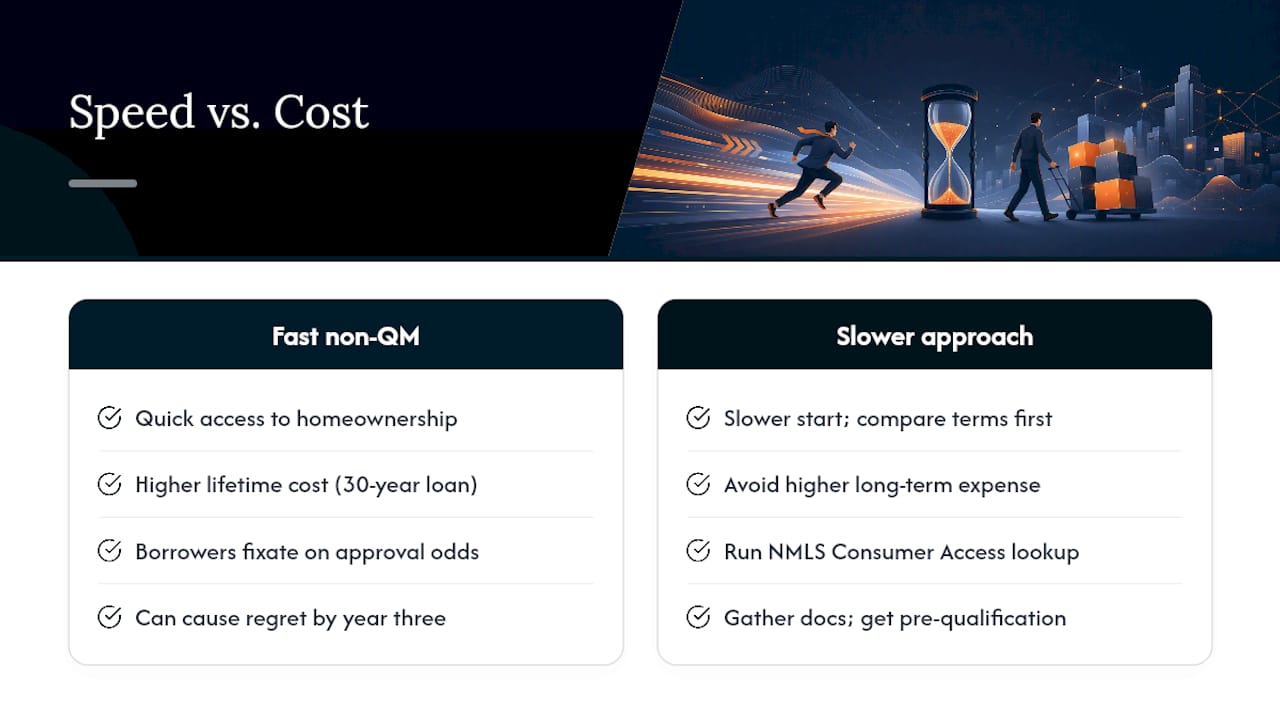
Before signing with anyone, run their name through the NMLS Consumer Access lookup to confirm they’re properly licensed. It takes two minutes and it’s the easiest way to avoid a bad actor preying on borrowers who feel like they have no other options.
Don’t rush this. Gather your documentation, get a real pre-qualification, and compare terms before you start touring houses. A slower start beats a fast approval you regret at year three.
- Saad
Check Your Options Before You Commit to a Rate
Some lenders specialize in qualifying self-employed borrowers based on actual bank deposits rather than the income reported on tax returns after write-offs. This difference can help separate approvals from denials when rebuilding after bankruptcy.
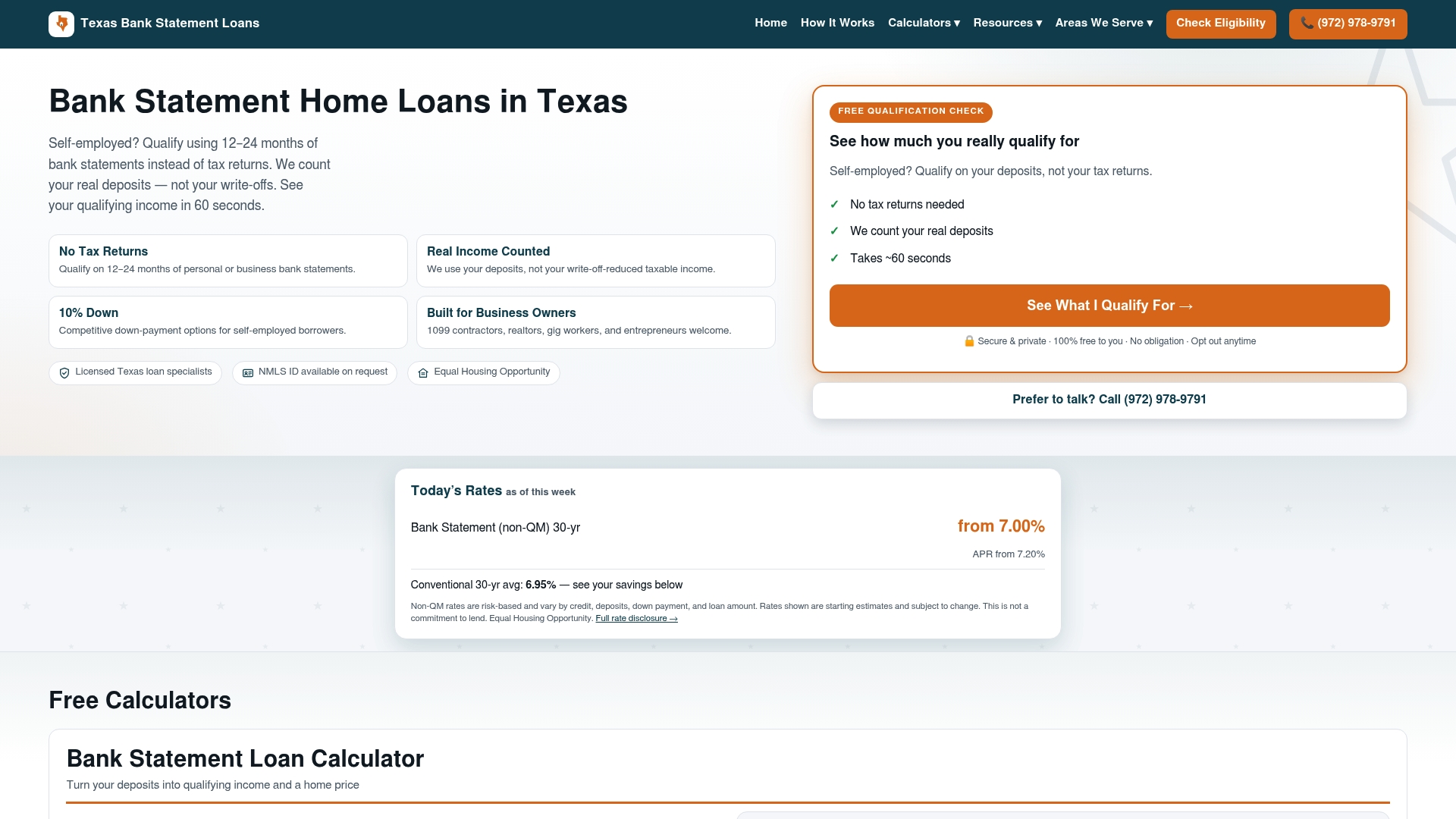
Start with the free qualification check, which takes about 60 seconds and gives you a realistic read on affordability before you spend time house-hunting. Have your last 12 to 24 months of bank statements handy, along with your bankruptcy discharge paperwork, since both speed up the process considerably. From there, the bank statement loan calculator helps you estimate qualifying income and monthly payments, and the current rates page shows where Bank Statement (non-QM) 30-year pricing starts, from 7.00% per year. Real estate investors weighing a rental purchase instead of a primary residence can run numbers through the DSCR loan tools to see if cash-flow-based qualifying fits better. Submitting a qualification request doesn’t obligate you to anything. It just gives you real numbers to plan around instead of guesses.
Where to Verify the Rules Yourself
- Fannie Mae’s waiting period guidance confirms conventional loan timelines after bankruptcy.
- HUD’s FHA bankruptcy guidance explains FHA-specific eligibility rules.
- U.S. Courts’ Chapter 13 basics covers repayment plan timing.
- NMLS Consumer Access verifies a lender’s or loan officer’s license.
This article is general information, not a substitute for advice from a qualified financial advisor. Consult a qualified financial professional about your own circumstances before acting on anything here.
Sources
- Significant Derogatory Credit Events, Waiting Periods and Re‑establishing Credit | Fannie Mae
- Non‑QM loans for self‑employed borrowers and investors | HousingWire
- How does a bankruptcy affect a borrower’s eligibility for an FHA mortgage? | HUD Answers
- Chapter 7 bankruptcy basics | U.S. Courts
- How soon can you buy a home after bankruptcy or foreclosure with a non‑QM loan | NASB
FAQ
Can You Get a Bank Loan After Bankruptcy?
Yes. Non-QM and bank statement lenders often approve borrowers well before conventional guidelines would allow, sometimes within months of a Chapter 7 discharge, according to NASB’s overview of post-bankruptcy non-QM timing. Expect a larger down payment and a higher rate than you’d get with a clean credit history.
What Is a Bank Statement Loan?
A bank statement loan qualifies you using 12 to 24 months of personal or business bank deposits instead of tax returns, with lenders applying an expense factor to business account income to estimate real earnings, per HousingWire’s non-QM loan guide. It’s built for self-employed borrowers whose tax returns understate their actual cash flow.
Can I Get a Loan After Declaring Bankruptcy?
Yes, though the loan type available to you depends heavily on timing and which chapter you filed. Non-QM programs are typically your fastest route, while conventional, FHA, and VA loans require longer waiting periods measured from your discharge or dismissal date.
How Many Years of Bank Statements Do You Need for Chapter 7?
Most bank statement loan programs ask for 12 to 24 months of statements regardless of your bankruptcy chapter, since the goal is verifying consistent income rather than measuring time since discharge. Your Chapter 7 discharge date is tracked separately as the milestone lenders use to judge how much time has passed since the bankruptcy, per U.S. Courts’ Chapter 7 basics.
See what you qualify for in 60 seconds, free and no credit check. Use the eligibility check at the top of this page.