
A single overdraft from months ago rarely sinks a mortgage application. What actually worries underwriters is a pattern: repeated overdrafts, especially recent ones, that suggest you can’t consistently cover your obligations. If that describes your statements, the fix isn’t panic. It’s documentation, a clean 60 to 90 day stretch, and, if needed, a lender who evaluates cash flow differently.
TL;DR:
- Multiple overdrafts within 60 to 90 days signal cash-flow issues, especially if they are recent or frequent, and often lead to manual review or stricter conditions.
- Responding proactively with clear documentation and a clean 60-day bank statement can neutralize isolated overdrafts and improve mortgage approval chances.
- Overdrafts tied to specific, explainable causes like timing mismatches or one-time expenses are less risky than ongoing reliance on overdrafts to manage finances.
- Self-employed borrowers with irregular income and overdrafts may benefit from bank-statement loan programs that assess 12 to 24 months of deposits rather than tax returns.
- Building a cash cushion, turning on alerts, and consulting a loan officer early can help reduce overdraft frequency before applying for a mortgage.
Table of Contents
- What Lenders Look for on Bank Statements
- How Underwriters Read Overdraft Frequency and Timing
- Timelines and Likely Underwriting Outcomes
- How to Document and Explain Overdrafts to an Underwriter
- Practical Steps to Reduce Overdraft Risk Before You Apply
- When a Bank-Statement Loan May Be the Better Path
- What I Ask Borrowers to Do in the Next 60 Days
- If Your Overdrafts Trace Back to Self-Employment, Here’s an Option
- Sources
- FAQ
What Lenders Look for on Bank Statements
Standard mortgage programs typically pull your most recent several months of bank statements. Specialty bank-statement loan programs, built for self-employed borrowers, go further back, reviewing 12 to 24 months of deposits to build a fuller income picture.
Either way, an underwriter isn’t just glancing at your balance. They’re checking specific line items to gauge risk and confirm the numbers on your application match reality.
- Regular income deposits and whether they align with your stated earnings
- Recurring bills like rent, car payments, and credit card minimums
- Large, unexplained deposits that don’t tie to a documented source
- Overdrafts and NSF fees, which flag potential cash-flow strain
- Transfers between accounts that could mask the true picture
Overdrafts stand out because they hint at something a credit score alone won’t show: whether you’re managing money well right now, this month, not just whether you paid your bills on time over the past two years.
How Underwriters Read Overdraft Frequency and Timing
An underwriter treats a single overdraft from four months ago very differently than three overdrafts in the past 60 days. Timing and repetition change everything.

One bounced payment tied to a known event, a mistimed autopay, a late paycheck, is usually a footnote. Multiple overdrafts clustered together tell a different story, and that pattern often prompts manual underwriting or requests for larger cash reserves.
Here’s roughly where the line sits, based on how underwriting guides describe risk thresholds:
- One overdraft in six months with a clear cause: usually a non-issue
- Two to three overdrafts within a 60 to 90 day window: expect questions
- Four or more NSF events in two months: expect manual review, extra reserve requirements, or denial
Overdrafts don’t operate alone, either. An underwriter weighs them alongside your debt-to-income ratio, credit score, and available reserves. A borrower with a 780 credit score, six months of reserves, and one overdraft looks fine. A borrower with a maxed-out DTI, thin reserves, and repeated overdrafts is a much harder approval, even with decent credit.
Timelines and Likely Underwriting Outcomes
Underwriters don’t just flag overdrafts. They act on them, and the response usually falls into one of a few categories depending on severity and how recent the activity is.
- Request for a written explanation. Common for one or two isolated incidents; often resolved within days.
- Requirement for additional cash reserves. The lender wants proof you can absorb a shock beyond the mortgage payment itself.
- Manual underwriting. Your file gets pulled from automated approval and reviewed line by line, which adds time but isn’t a denial.
- Higher rate or adjusted terms. Less common, but possible when overdrafts combine with other risk factors.
- Denial. Reserved for cases showing ongoing, unresolved cash-flow problems with no clear path to correction.
If your statements show recent, repeated overdrafts, waiting matters. A clean 60 day stretch before applying meaningfully improves your odds, and specialty programs reviewing 12 to 24 months will want that clean pattern to extend further back, not just the most recent statement cycle.
How to Document and Explain Overdrafts to an Underwriter
An explanation letter won’t erase a pattern of financial stress, but it can neutralize a one-time incident that would otherwise raise a flag. Keep it short and factual.
- State the cause plainly: a late client payment, a timing mismatch, a one-time medical bill
- Include the exact date and amount of the overdraft
- Describe the corrective step you took, such as paying it off immediately or setting up a transfer
- Attach supporting proof: pay stubs, a receipt for the one-time expense, or confirmation the account is now current
Winning with Wade’s underwriting guidance notes that a single, well-documented overdraft is often resolved with nothing more than this letter and a matching paper trail. What an explanation letter can’t fix is a recurring reliance on overdrafts as a cash-flow tool. If your statements show that pattern across multiple months, expect the underwriter to ask for reserves or a longer clean history instead of accepting a written explanation alone.
Pro Tip: Write the explanation letter before the underwriter asks for it. Attaching it proactively with your initial documents signals you’re on top of your finances, not scrambling to respond to a red flag.
Practical Steps to Reduce Overdraft Risk Before You Apply
Fixing overdraft problems is mostly about sequencing. Do these in order, starting as soon as you know you’ll apply for a mortgage.
- Build a cushion immediately. Having a cushion sitting in checking can absorb the timing gaps that cause most overdrafts.
- Stop discretionary spending that pushes your balance close to zero. This is temporary, not forever.
- Turn on low-balance alerts through your bank’s app so you catch a problem days before it becomes an overdraft.
- Set up automatic transfers from savings to checking, or enroll in overdraft protection tied to a linked account, so a shortfall doesn’t bounce a payment.
- If overdrafts persist despite these steps, talk to a loan officer early. Some lenders weigh explanations more heavily than others, and some review longer statement windows that can smooth out a rough recent month. A resource like Monika Petrásková’s guidance on preparing mortgage documentation covers how to get ahead of banking anomalies before they reach an underwriter’s desk.
Pro Tip: Overdrafts themselves usually don’t show up on your credit report unless they go to collections, but underwriters see every one of them on your bank statements regardless of your credit score. Fixing your score won’t hide a pattern of overdrafts. Only clean statements will.
When a Bank-Statement Loan May Be the Better Path
Traditional underwriting assumes steady, documented paychecks. Self-employed borrowers, 1099 contractors, and gig workers rarely fit that mold, and a temporary overdraft can look worse on a tax-return-based application than it actually is.
Texasbankstatementloans takes a different starting point. Instead of tax returns, the program evaluates 12 to 24 months of bank deposits to build a picture of actual cash flow, not just what shows up on a Schedule C after deductions.
That distinction matters for a specific type of borrower: someone with a rough month or two on paper but consistent deposits overall.
- If your overdrafts trace back to timing gaps between client payments rather than genuine income shortfalls, a longer deposit history can outweigh a couple of rough weeks
- If your income is strong but irregular, a program built around deposits may accept a file that a standard 60 day review would flag
None of that guarantees approval, but it opens a door that traditional underwriting often keeps closed for self-employed income.
What I Ask Borrowers to Do in the Next 60 Days

If your statements show overdrafts, here’s the short version: stop them now, build a cushion, write down exactly what caused each one, and call your loan officer before they call you.
Being upfront costs you nothing and buys you credibility. Underwriters aren’t looking to punish you for a rough month. They’re looking for evidence you can manage the mortgage payment on top of everything else, and a borrower who explains a problem before it’s flagged looks far steadier than one who gets caught off guard.
- Saad
If Your Overdrafts Trace Back to Self-Employment, Here’s an Option
If your bank statements show overdrafts because your income arrives in uneven chunks rather than steady paychecks, a standard mortgage application was probably never going to reflect your real financial picture anyway. Texasbankstatementloans built its program around that exact problem: instead of tax returns, it looks at 12 to 24 months of actual deposits.
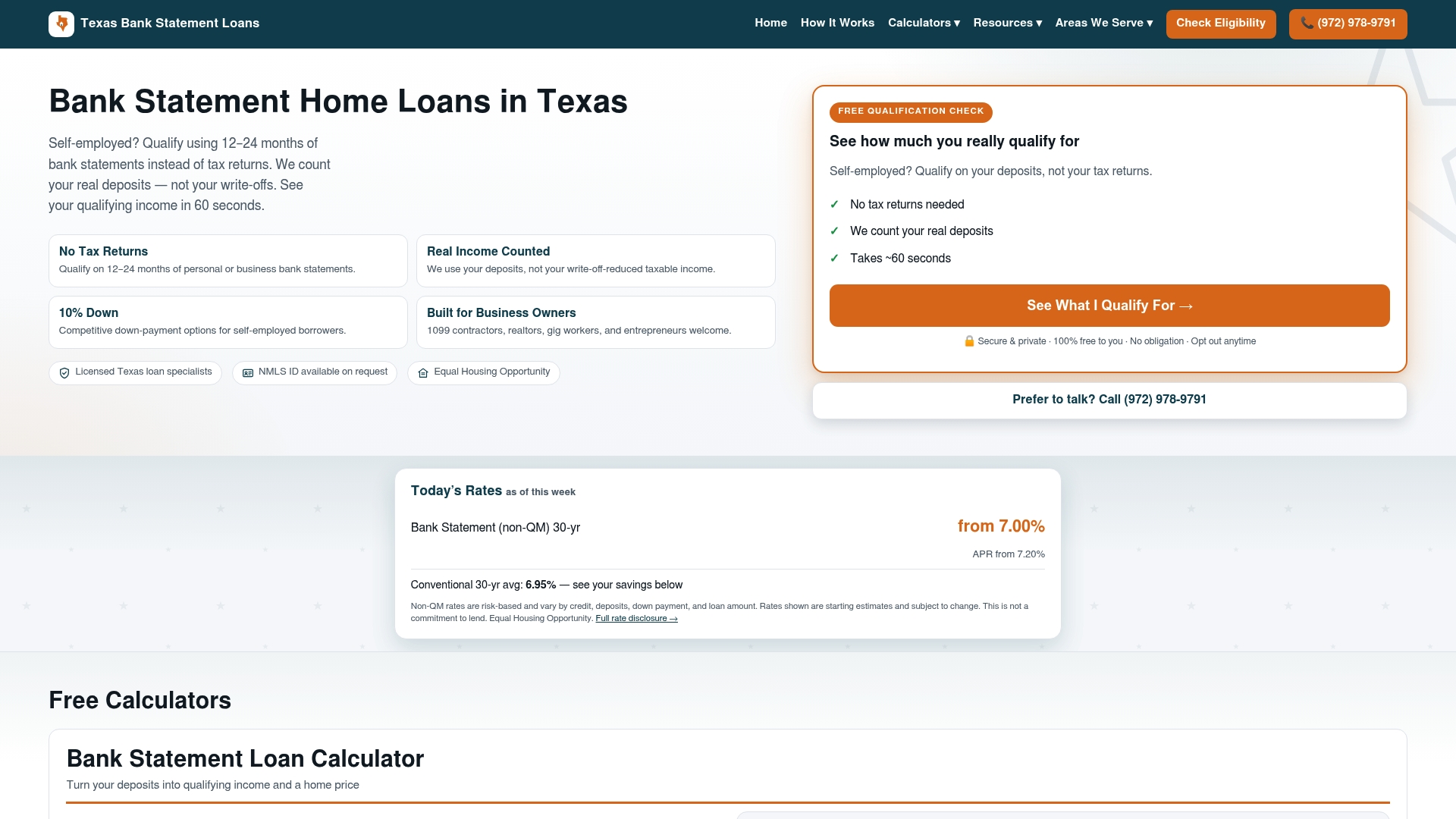
The qualification check takes about 60 seconds and comes with no obligation, giving you a realistic read on what you can afford before you commit to a full application. Down payment options may start at a relatively low percentage, which matters if cash reserves are part of what’s holding your file back elsewhere. Run the free qualification check to see where you stand, or use the mortgage calculators and tools to model different loan amounts against your actual deposit history before you talk to a lender.
This article is general information, not a substitute for advice from a qualified financial advisor. Consult a qualified financial professional about your own circumstances before acting on anything here.
Sources
- What do mortgage lenders look for on bank statements? | Legal Clarity
- Bank statements: 3 things mortgage lenders don’t want to see | The Mortgage Reports
FAQ
Can I Be Denied a Mortgage Due to Overdrafts?
Yes, but usually only when overdrafts are frequent and recent, not from a single isolated incident. Repeated NSF activity within a 60 to 90 day window is what typically pushes a file toward denial or additional conditions.
Can You Get Approved for a Mortgage With an Overdraft?
Yes, most borrowers with one overdraft, especially an older one with a clear explanation, still get approved without issue. Underwriters focus far more on patterns than on a single event.
Can an Overdraft Get My Mortgage Rejected?
A single overdraft rarely causes rejection on its own, but it can trigger manual underwriting or a request for a written explanation. Rejection becomes more likely when overdrafts repeat across multiple months alongside weak reserves or a high debt-to-income ratio.
Do Underwriters Look at Overdrafts?
Yes, underwriters review recent bank statements specifically for overdrafts and NSF fees as part of assessing cash-flow stability. Self-employed borrowers using a program like Texasbankstatementloans’s bank-statement approach may find longer deposit histories offset a short-term rough patch that a standard 60 day review would flag.
See what you qualify for in 60 seconds, free and no credit check. Use the eligibility check at the top of this page.