
Bank-statement HELOCs that qualify for an automated valuation waiver often fund in as few as 5 business days, while bank-statement purchase and cash-out mortgages typically close within a few weeks. The single biggest lever you control is how fast you clear underwriting conditions and whether your file skips a full appraisal. One fixed constraint sits near the finish line regardless: the three-business-day Closing Disclosure waiting period the CFPB requires before closing.
TL;DR:
- Using an automated valuation model can enable bank-statement HELOCs to fund within 5 to 10 business days for well-prepared borrowers, but purchase and cash-out loans typically take 21 to 45 days.
- Appraisal requirements and property type significantly influence timeline delays, with unique properties or high loan amounts often adding 7 to 21 days due to traditional appraisals.
- Rapid approval hinges on submitting complete documentation upfront, responding swiftly to conditions, and avoiding new debts or transfers during underwriting.
- Underwriters primarily evaluate deposit consistency, large unexplained transfers, and the connection to income, which can extend processing if explanations are delayed.
- A pre-submission self-review of bank statements and early scheduling of appraisals can accelerate underwriting, but the three-day waiting period after final approval remains unavoidable.
Table of Contents
- Bank Statement Underwriting Timeline by Loan Type
- The Underwriting Process Timeline, Step by Step
- What Actually Speeds Up or Slows Down Your File
- A Borrower Checklist for Faster Bank Statement Underwriting
- What Underwriters Look for in Your Bank Statements
- How Texas Bank Statement Home Loans Approaches the Timeline
- An Honest Take on Speed Versus Fit
- Get a Realistic Timeline for Your Bank Statement Loan
- Sources
- FAQ
Bank Statement Underwriting Timeline by Loan Type
The product you’re applying for shapes your timeline more than almost anything else. A HELOC that relies on an automated valuation model moves through underwriting fast because there’s no appraiser to schedule. A purchase mortgage or cash-out refinance usually needs a licensed appraisal, plus a deeper manual review of your deposit history, so it takes longer no matter how organized your paperwork is.
Here’s how the ranges typically break down:
- Digital HELOCs with AVM/appraisal waiver: 5 to 10 business days for a well-prepared borrower, according to reporting on 2026 bank-statement loan speed.
- Bank-statement purchase mortgages: roughly 21 to 45 days, per industry data on self-employed borrower timelines.
- Bank-statement cash-out refinances: similar to purchase timelines, often landing near the middle or high end of that 21 to 45 day window because of added title and payoff steps.
Loan amount and property type also decide whether an AVM is even on the table. Lenders generally reserve appraisal waivers for lower-risk loan-to-value ratios and properties with strong comparable sales nearby. A unique property, a high loan amount, or a combined loan-to-value ratio above a lender’s cutoff usually forces a traditional appraisal, which alone can add 7 to 21 business days over an AVM.
The Underwriting Process Timeline, Step by Step
Underwriting isn’t one event. It’s a sequence of checkpoints, and knowing where you are in that sequence tells you what to expect next.
- Application and document submission (day 0 to 1). A complete bank-statement file includes 12 to 24 consecutive months of statements, every page, plus income documentation like a CPA letter or profit-and-loss statement.
- Initial automated review and first underwriter pass (day 1 to 3). Most files clear an automated risk check quickly, but deposit inconsistencies or missing pages trigger a manual look. Underwriting’s first full review commonly takes just a few business days on its own.
- Appraisal or AVM confirmation. If a physical appraisal is required, expect it to run in parallel with underwriting rather than before it, which is one reason appraisal delays are the most common cause of missed closing dates.
- Conditional approval. The underwriter issues a list of remaining items, ranging from a bank statement explanation letter to updated insurance quotes.
- Clearing conditions and reaching final approval. This stretch varies the most. Moving from conditional to clear-to-close often takes one to two more weeks, driven almost entirely by how fast you and your loan officer clear conditions.
- Clear-to-close and Closing Disclosure. Once approved, your lender issues the Closing Disclosure, and the clock starts on that mandatory three-business-day wait before you can sign.
For context, ICE Mortgage Technology reported an average purchase loan close time near 36.8 days industry-wide in March 2026. Bank-statement files that stay organized often beat that average because they skip IRS transcript delays entirely, even though the deposit analysis itself takes real underwriter time.
What Actually Speeds Up or Slows Down Your File
A handful of variables decide whether your file lands on the fast end of the range or drags toward the outer edge.
- Appraisal versus AVM eligibility. Property type, loan size, and available comparable sales determine whether you skip the appraisal step entirely.
- Documentation completeness. Missing statement pages, an incomplete 12 or 24 month history, or a missing CPA letter almost always triggers a follow-up request that adds days.
- Deposit consistency. Large, unexplained transfers or frequent NSF charges typically flag automated review triggers, forcing a closer manual look.
- Program shifts. Many lenders moved toward 24-month documentation as the default in 2025 and 2026, which widens the scope of what underwriters review and can add time versus an older 12-month program.
Pro Tip: Pull your own bank statements and scan them like an underwriter would before you submit anything. If a $9,000 deposit doesn’t have an obvious source, write a one-line explanation now instead of waiting for the lender to ask.
A Borrower Checklist for Faster Bank Statement Underwriting
Preparation compresses timelines more than any other single factor, and it’s almost entirely in your hands.
- Gather 12 to 24 consecutive months of statements, every page, before you apply. Pick the account or accounts that show the steadiest income pattern.
- Write a short letter explaining any large or irregular deposits, and have your CPA confirm your self-employment status in writing if your lender’s program calls for it.
- Ask about AVM eligibility early, and if an appraisal is required, get it scheduled the moment your file opens rather than waiting for a formal request.
- Turn around every condition within 24 hours. Same-day document uploads materially shift final approval timing more than almost any other borrower action.
- Avoid new debt, large undocumented transfers, or job changes while your file is in underwriting. Any of those can reopen conditions you thought were closed.
Pro Tip: Keep a dedicated folder, digital or paper, with every statement, letter, and disclosure your lender has asked for. When a new condition lands, you want to answer it in minutes, not days.
What Underwriters Look for in Your Bank Statements
Underwriters aren’t just checking that money is landing in your account. They’re building a qualifying income figure and looking for anything that undermines confidence in it.
Most programs calculate qualifying income by averaging deposits over the documentation period, typically 12 or 24 months, then applying an expense factor to estimate your real take-home income. That expense factor varies by lender and by whether you’re using personal or business statements.
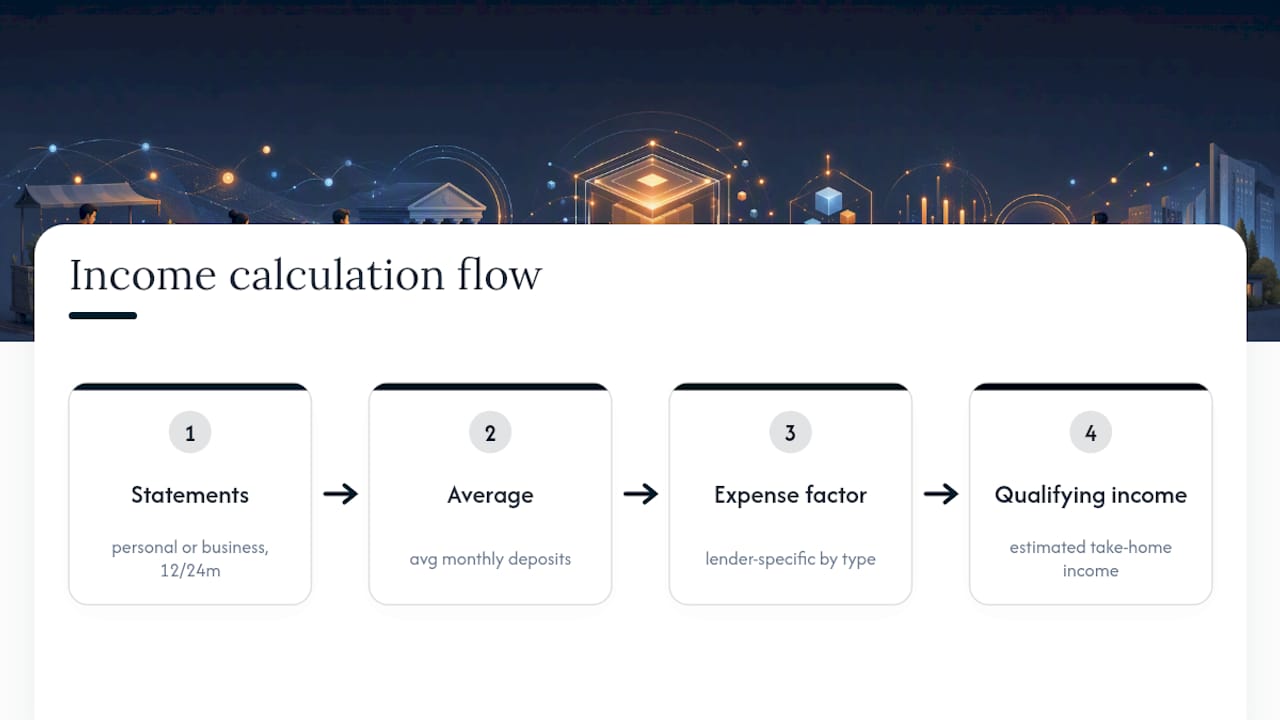
A few patterns reliably slow things down: deposits that swing wildly month to month, repeated NSF or overdraft charges, large transfers that don’t tie back to your business, or deposits from a third party unrelated to your income source. Each one usually triggers a formal request for explanation, and each request adds calendar days while you gather the answer.
What clears those flags fastest is documentation that connects the dots: annotated deposit notes, invoices matching specific deposits, a bookkeeping report, or a CPA letter. Showing adequate cash reserves upfront also helps, since it often removes a conditional item before the underwriter even asks for it.
How Texas Bank Statement Home Loans Approaches the Timeline
Texas Bank Statement Home Loans built its process around the exact bottleneck described above: proving real income without a tax return. The program evaluates 12 to 24 months of personal or business deposits, and its quick qualification check gives you a realistic read on affordability in about 60 seconds, before you submit a single document.
An Honest Take on Speed Versus Fit
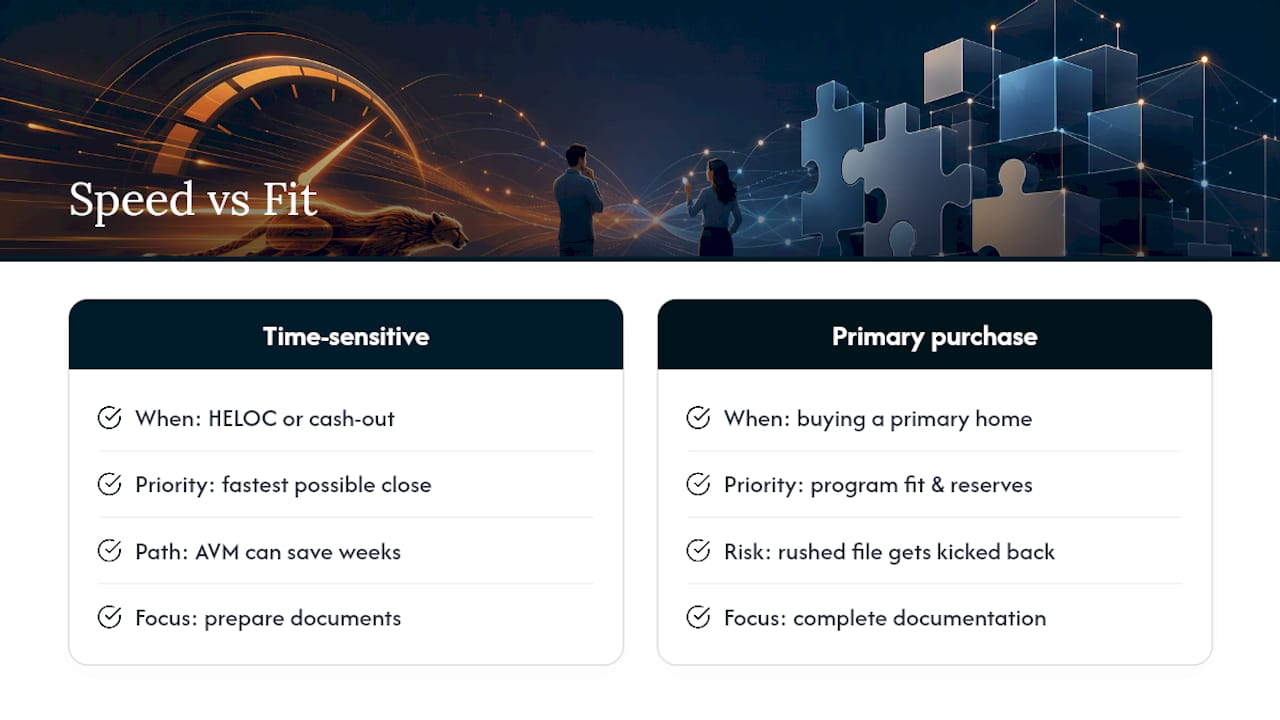
Chasing the fastest possible close makes sense for a HELOC or a time-sensitive cash-out need, where an AVM path genuinely saves weeks. For a primary home purchase, though, the better question isn’t “how fast” but “does this program actually fit my income and reserves.” A rushed file that gets kicked back for missing documentation loses more time than a slower, complete one ever would.
Speed is mostly earned through preparation. Appraisal availability and lender program rules are the parts you can’t control, so focus your energy where it actually pays off: your documents.
- Saad
Get a Realistic Timeline for Your Bank Statement Loan
This loan service exists for exactly the borrower this article describes: someone whose tax returns understate real income, and who needs a lender that evaluates actual bank deposits instead. Instead of guessing where your file will fall in the 21 to 45 day range, you can find out in advance what documentation you’ll need and what your realistic price range looks like.
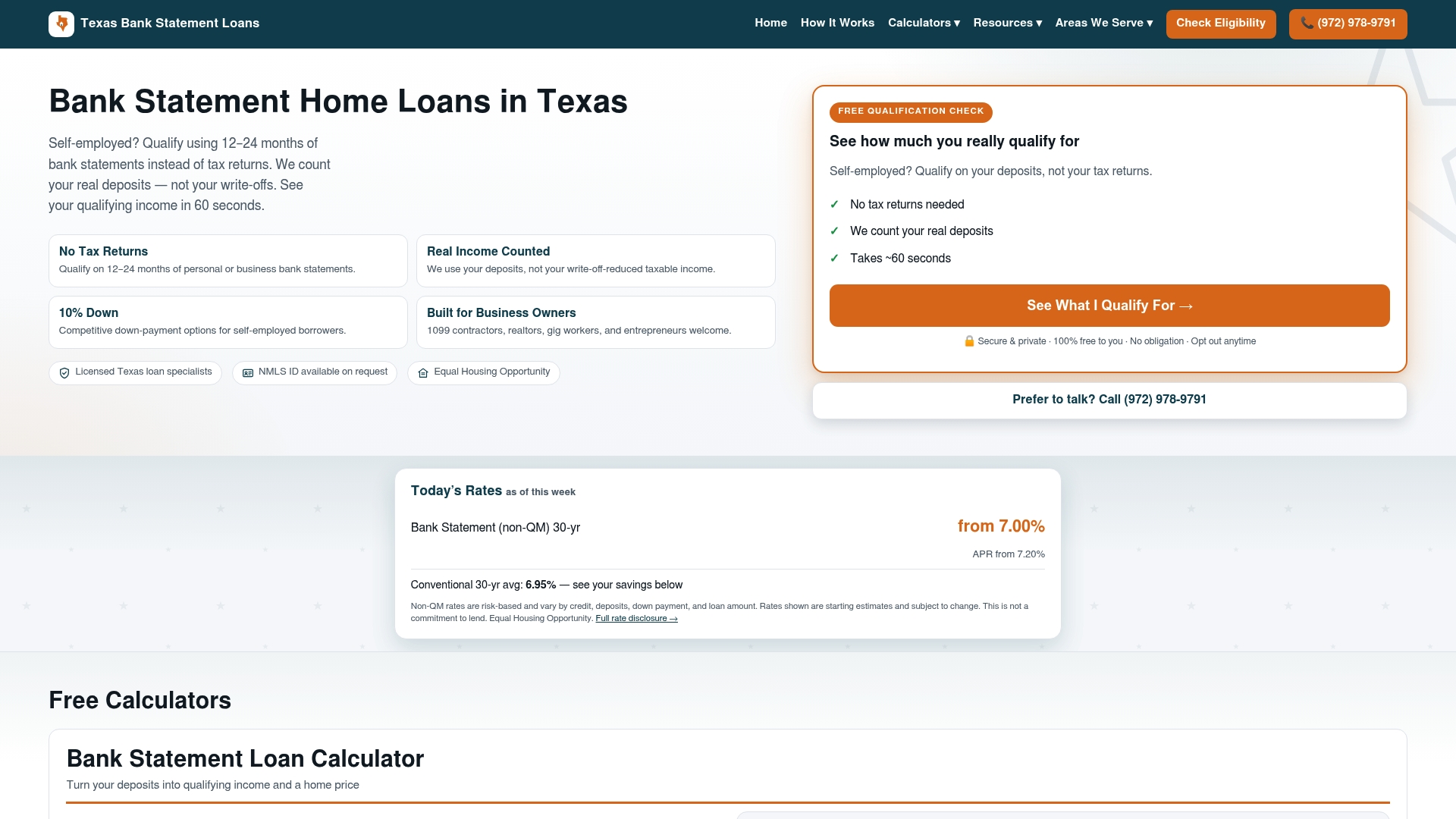
Start with the free qualification check, which takes about 60 seconds and gives you a real sense of what you can afford before you gather a single statement. From there, pull your 12 to 24 months of bank statements, run your numbers through the bank statement loan calculator, and connect with a loan officer with your documents already in hand. If you’re an investor rather than an owner-occupant, the DSCR loan calculator can help you compare that path before you commit to a program.
This article is general information, not a substitute for advice from a qualified financial advisor. Consult a qualified financial professional about your own circumstances before acting on anything here.
Sources
- What is a Closing Disclosure? | CFPB
- How Fast Can I Get a Bank Statement Loan in 2026? | RefiGuide
- Bank Statement Loans for Self-Employed Borrowers: How They Work in 2026 | HomeWealthMap
- How Long Does Underwriting Take? A Real 2026 Timeline - JVM Lending
FAQ
How many months of bank statements does an underwriter need?
Most programs require 12 to 24 consecutive months of statements, and many lenders shifted toward requiring 24 months as their default in 2025 and 2026.
How long does it take for a bank to do underwriting?
The first full underwriter review often takes just a few business days, but reaching final approval typically takes one to two additional weeks depending on how fast conditions get cleared.
Does underwriting mean you are approved?
Not automatically. Underwriting usually produces a conditional approval first, meaning you’re approved pending specific documentation, and only becomes a clear-to-close once every condition is satisfied.
What are underwriters looking for on bank statements?
Underwriters look for consistent deposit patterns that support your stated income, and they flag frequent NSF charges, large unexplained transfers, or deposits from unrelated third parties for further explanation.
How fast can Texas Bank Statement Home Loans get me a decision?
Timing depends on your loan type and documentation, but a free qualification check at Texasbankstatementloans gives you an initial read in about 60 seconds, before formal underwriting even starts.
See what you qualify for in 60 seconds, free and no credit check. Use the eligibility check at the top of this page.