
Yes, you can use cash deposits toward a down payment or closing costs, but only if you can document where the money came from and the lender accepts that source. Undocumented or recent large deposits often get reduced or excluded from your qualifying assets during underwriting. The safest move is to ask your lender early exactly which documents they require for any deposit you plan to use.
TL;DR:
- Deposits exceeding 50% of your monthly income require documentation, which can delay approval if the source is unclear or recent.
- Large or recent deposits are flagged through automated systems and require explanation to verify they are from legitimate, verifiable transactions.
- Acceptable documentation includes bank statements, gift letters, sale receipts, and paper trails that connect the deposit to a specific event or transfer.
- Moving money between accounts or depositing cash shortly before closing can trigger additional scrutiny and should be planned well in advance.
- Non-traditional underwriting options like bank-statement loans may better suit self-employed borrowers with irregular income patterns.
Table of Contents
- Why lenders scrutinize your cash deposits
- How lenders define a large or recent deposit
- Documents that satisfy an underwriter
- A checklist to avoid deposit headaches
- How banks handle and report your cash
- How program rules and underwriting approach differ
- What documentation discipline actually buys you
- Where a bank-statement loan fits if your income looks irregular
- Sources
- FAQ
Why lenders scrutinize your cash deposits
Lenders are not being nosy when they ask about a deposit that showed up in your checking account last month. Under the Ability to Repay and Qualified Mortgage rule, creditors need a reasonable basis for treating any inflow as income or usable assets before they can rely on it to approve your loan. That standard exists to protect both the borrower and the lender from a loan built on money that will not actually be there when it counts.
The CFPB frames these document requests as a routine part of closing rather than an accusation. Lenders generally must verify the source of income and down payment funds, and applicants with a recent large deposit should expect to explain where it came from. This is not optional paperwork the underwriter is inventing on the spot. It is built into how loans get approved and later sold to investors.
Automated underwriting systems flag deposits that look unusual against your normal account activity, and a human underwriter reviews those flags before clearing your file. A deposit that is three times your typical paycheck, or one that lands the week before your loan closes, tends to draw the most attention. The system is not trying to catch you doing something wrong. It is trying to confirm that the money you are counting on to close is really yours, and that it will not need to be paid back to someone else after your mortgage funds.

How lenders define a large or recent deposit
There is no single number that applies to every loan. Fannie Mae’s Selling Guide defines a large deposit as a single deposit that exceeds 50% of your total monthly qualifying income, not a flat dollar figure. Say your qualifying income is around six thousand dollars a month. A single deposit exceeding half of that amount crosses the threshold and needs an explanation, while a smaller deposit typically does not.
A deposit above 50% of your monthly qualifying income triggers a documentation request under Fannie Mae’s guide. That threshold matters more than most borrowers realize, because it means a modest bonus or a transfer between your own accounts can still get flagged if your income is on the lower end.

This underwriting threshold has nothing to do with the $10,000 figure most people associate with cash. Banks file a Currency Transaction Report on any cash transaction of $10,000 or more, and they can also flag repeated smaller transactions that look like they are being structured to avoid that reporting line. Those are bank compliance rules, separate from what your mortgage underwriter cares about. Timing matters just as much as size: a deposit sitting in your account for months is far easier to document as savings than one that appears the week before your closing date.
Documents that satisfy an underwriter
The paperwork a lender wants depends on where the money came from, but a few document types cover most situations.
- Verification of Deposit (Form 1006) or two months of bank statements, covering the most recent 60 days of activity, are the standard for purchase transactions according to Fannie Mae’s verification guidance.
- Gift letters need the donor’s name, relationship to you, dollar amount, and a statement that the funds are a gift with no expectation of repayment.
- Proof-of-sale paperwork, such as a bill of sale for a car or a closing statement from selling another property, ties a deposit to a specific, verifiable transaction.
- Cancelled checks, cashier’s check receipts, and escrow disbursement records show a clean paper trail from one account to another.
- Third-party asset verification reports can pull months of transaction history directly, which some lenders accept in place of collecting statements yourself.
Refinance transactions usually require only 30 days of account history rather than the 60 days expected for a purchase. Whatever the source, the goal is the same: a document that connects the deposit to a specific, explainable event rather than leaving the underwriter to guess.
A checklist to avoid deposit headaches
A little planning before you apply prevents most of the delays that come from unexplained deposits.
- Deposit any large sums well before you apply, and avoid mixing gift money or sale proceeds with your regular payroll deposits.
- If you need to move money between accounts, use a bank-to-bank transfer with a memo line that describes the source, rather than withdrawing and redepositing cash.
- Gather supporting evidence as you go: donor bank statements for gifts, a bill of sale for an asset, cancelled checks, and transaction receipts.
- Keep everything in one organized folder, digital or physical, so you are not searching for a wire confirmation the night before closing.
- Ask your loan officer directly which documents they need for each deposit, send copies as soon as you have them, and confirm they were received.
Pro Tip: If you are self-employed and your income does not show up as tidy, predictable paychecks, ask about bank-statement underwriting or a third-party asset-verification report before you start moving money around.
How banks handle and report your cash
Depositing cash does not always mean instant access to it. Under CFPB funds-availability rules, cash deposited in person is generally available by the next business day, though exceptions apply for new accounts, suspected fraud, or unusually large transactions.
Separately, banks file a Currency Transaction Report on cash transactions of $10,000 or more, and repeated activity that looks designed to dodge that threshold can trigger a Suspicious Activity Report. Neither of these bank-side processes is the same as your mortgage lender’s documentation request, but a hold or a flagged transaction close to your closing date can still slow things down. Plan large cash moves well ahead of your closing so a bank hold never becomes a mortgage delay.
How program rules and underwriting approach differ
Not every loan program treats a cash deposit the same way. HUD’s FHA handbook allows cash saved at home and contributions from private savings clubs, sources conventional loans generally do not recognize, but it requires a credible written explanation and supporting documentation before those funds count. FHA underwriters expect more detail on recent large deposits than some conventional files require.
On the conventional side, Fannie Mae’s automated Desktop Underwriter system generates specific messages when it spots a large deposit, and satisfying those messages is usually enough to validate the asset. When a deposit is partly sourced and partly not, only the unsourced portion gets subtracted from qualifying assets, not the whole deposit.
For self-employed borrowers, this is where a different underwriting approach can help. Reviewing 12 to 24 months of bank deposits gives a fuller picture of actual income than a handful of recent transactions ever could, which is part of why bank-statement underwriting exists as a path for business owners and contractors whose tax returns understate what they really earn.
Well-documented deposits, consistent patterns, and a paper trail that matches your stated income are what turn a flagged transaction into a routine file.
What documentation discipline actually buys you
Most borrowers treat deposit documentation as a hoop to jump through, but it is really the fastest way to protect your closing date. A file with clean, dated paperwork moves through underwriting in days. A file with an unexplained transfer sits in a queue while the underwriter waits on you to respond, and every round of back and forth pushes your closing further out.
The bigger mistake I see is borrowers moving money around right before they apply, thinking it looks better on paper. It does the opposite. Deposit early, keep gift funds and sale proceeds separate from your everyday spending account, and if your income comes from self-employment or gig work, look into a lender that reads bank deposits rather than tax returns.
- Saad
Where a bank-statement loan fits if your income looks irregular
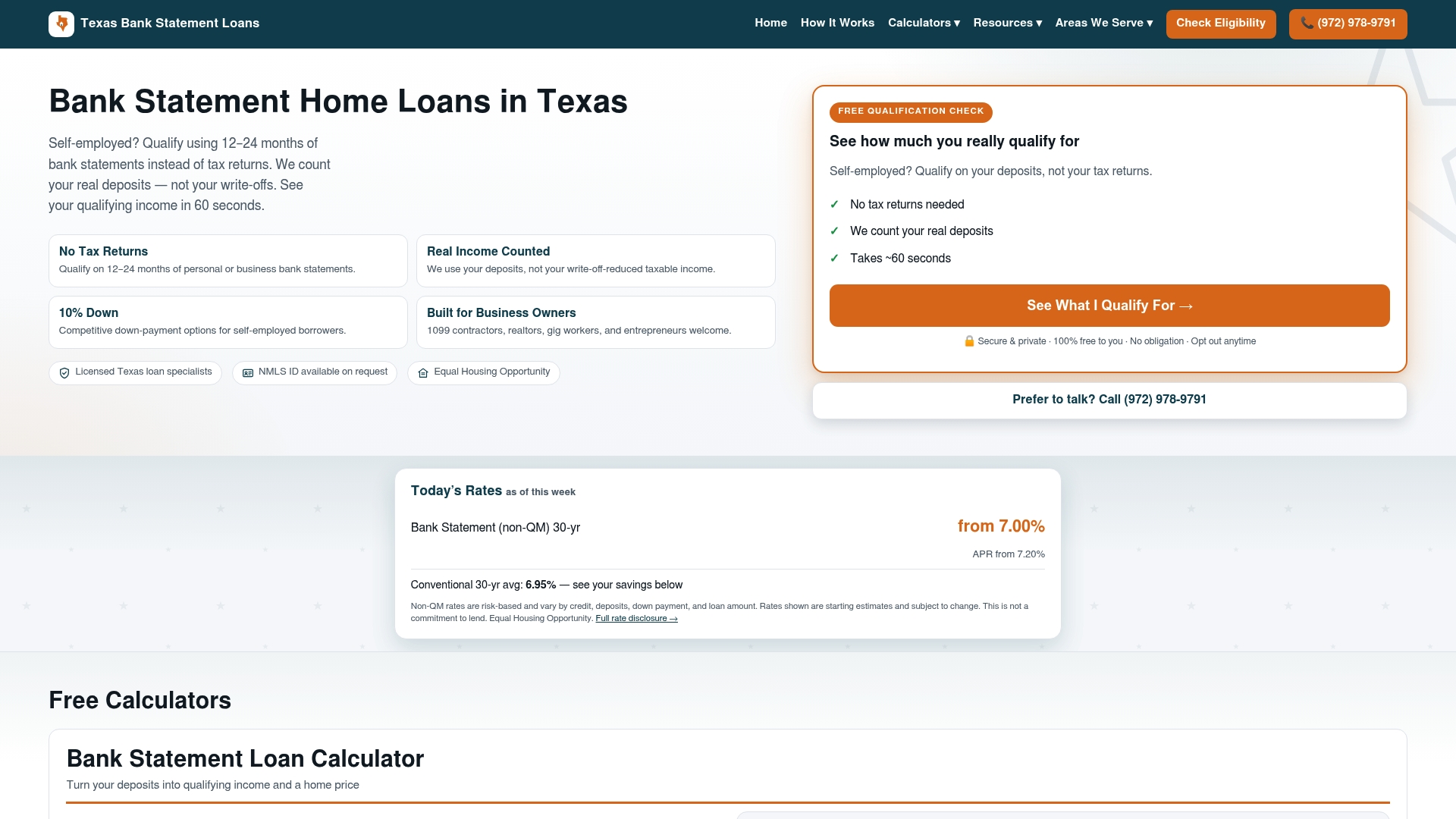
If your tax returns understate what you actually bring in because of write-offs or seasonal work, cash deposit rules built around W-2 income can work against you even when your finances are solid. Texas Bank Statement Home Loans evaluates 12 to 24 months of personal or business bank deposits instead of tax returns, so a well-documented deposit pattern becomes a strength rather than a red flag.
- Some borrowers can qualify using actual bank deposits rather than adjusted gross income.
- The service includes down payment options and a free, no-obligation qualification check.
- Investment property buyers can also explore DSCR loan options that qualify based on property cash flow rather than personal income.
If documenting cash deposits under a traditional program feels like it is working against your real financial picture, check your options with our Bank Statement (non-QM) 30-yr loan and see what you could qualify for today.
This article is general information, not a substitute for advice from a qualified financial advisor. Consult a qualified financial professional about your own circumstances before acting on anything here.
Sources
- Submit documents and answer requests from the lender | Consumer Financial Protection Bureau
- Depository accounts | Fannie Mae Selling Guide
FAQ
How often can I deposit $9,000 in cash without it being reported?
Banks file a Currency Transaction Report on any cash transaction of $10,000 or more. Repeated deposits just under that line can still be flagged as possible structuring, which is a separate concern from your mortgage lender’s documentation request.
What are the new rules for cash deposits on a mortgage application?
There is no single new nationwide rule; requirements depend on your loan program and lender. Under current Fannie Mae guidance, a large deposit is any single deposit exceeding 50% of your monthly qualifying income, and unsourced amounts can be subtracted from your usable assets.
Can I bring physical cash to closing?
No. Closing agents generally require funds in the form of a cashier’s check or a wire transfer from your bank, not physical cash, according to CFPB guidance. Confirm the exact method your closing agent accepts well before your closing date.
How big of a cash deposit can trigger extra questions from my lender?
The threshold is not a flat dollar amount. Under Fannie Mae’s definition, any single deposit above 50% of your total monthly qualifying income counts as large and needs a documented source.
What happens if I can’t explain a large deposit?
The lender will typically subtract the unexplained portion from your verified assets and use the reduced figure to decide whether you still qualify. If removing that amount drops you below the required down payment or reserves, you may need another documented source or a program with different asset guidelines, such as FHA’s provisions for cash saved at home.
See what you qualify for in 60 seconds, free and no credit check. Use the eligibility check at the top of this page.